The modern workspace has evolved far beyond a functional enclave housing a computer and a keyboard. For digital content creators, remote professionals, and design enthusiasts alike, the desk is a canvas—a physical manifestation of personal brand, creative energy, and productivity. Among the most transformative interior styling movements is the integration of ambient lighting, specifically the aesthetic desk setup with an LED mirror.
Merging the realms of interior design, personal grooming, and professional content creation, the illuminated mirror has transitioned from vanity tables and dressing rooms directly onto the executive and creative desktop. This comprehensive, deep-dive authoritative guide explores the philosophy, execution, ergonomic science, and high-value monetization potential behind designing a breathtaking, high-utility desk setup anchored by an LED mirror.
1. The Philosophy of the Illuminated Workspace: Why an LED Mirror?
To understand the appeal of an LED-backed mirror on a desk, one must examine the intersection of psychology, architecture, and lighting design. Workspaces heavily dictate mental clarity, focus, and creative output. Traditional desk setups rely solely on overhead lighting, monitor light bars, or conventional desk lamps. While functional, these light sources often create harsh shadows, screen glare, or an institutional atmosphere.
An LED mirror desk setup introduces three core pillars of modern environmental design:
- Layered Ambient Illumination: By diffusing light directly from the reflective surface, LED mirrors cast an even, flattering, and glare-free glow across the workspace. This reduces eye strain during late-night editing sessions or intensive workflow sprints.
- Spatial Expansion: Mirrors are a time-tested interior design trick. Placing a medium-to-large scale mirror on or immediately above a desk visually doubles the depth of the room, making compact home offices or bedroom study nooks feel expansive and breathable.
- Multi-Functional Utility: For content creators, live streamers, and remote professionals who frequently transition from deep work to video calls, having a high-clarity mirror with adjustable color temperatures right at the desk eliminates friction. Touch-up checks, content framing, and lighting adjustments happen seamlessly in real time.

2. Core Components of a High-Value Aesthetic Desk Setup
Building an upscale, cohesive desk arrangement requires careful curation. Every element must balance visual minimalism with tactile and technical excellence. Here is the blueprint for assembling an elite LED mirror workstation:
The Foundation: The Desk Surface and Ergonomics
The choice of desktop sets the tone for the entire aesthetic. Natural wood tones—such as walnut, white oak, or solid ash—provide warmth that contrasts beautifully with the cool or neutral glow of an LED mirror.
- Dimensions: Aim for a minimum depth of 60cm to 80cm and a width of 140cm to 180cm. This ensures ample clearance for your monitor, keyboard, the mirror base (or wall-mounting clearance), and desktop accessories.
- Cable Management: A visible mess of cords instantly shatters an aesthetic environment. Utilize under-desk cable raceways, magnetic clips, and braided sleeves to maintain a pristine, minimalist surface.
Choosing the Right LED Mirror
Not all LED mirrors are created equal. When selecting a mirror for a desk setup rather than a bathroom, look at specific manufacturing specifications:
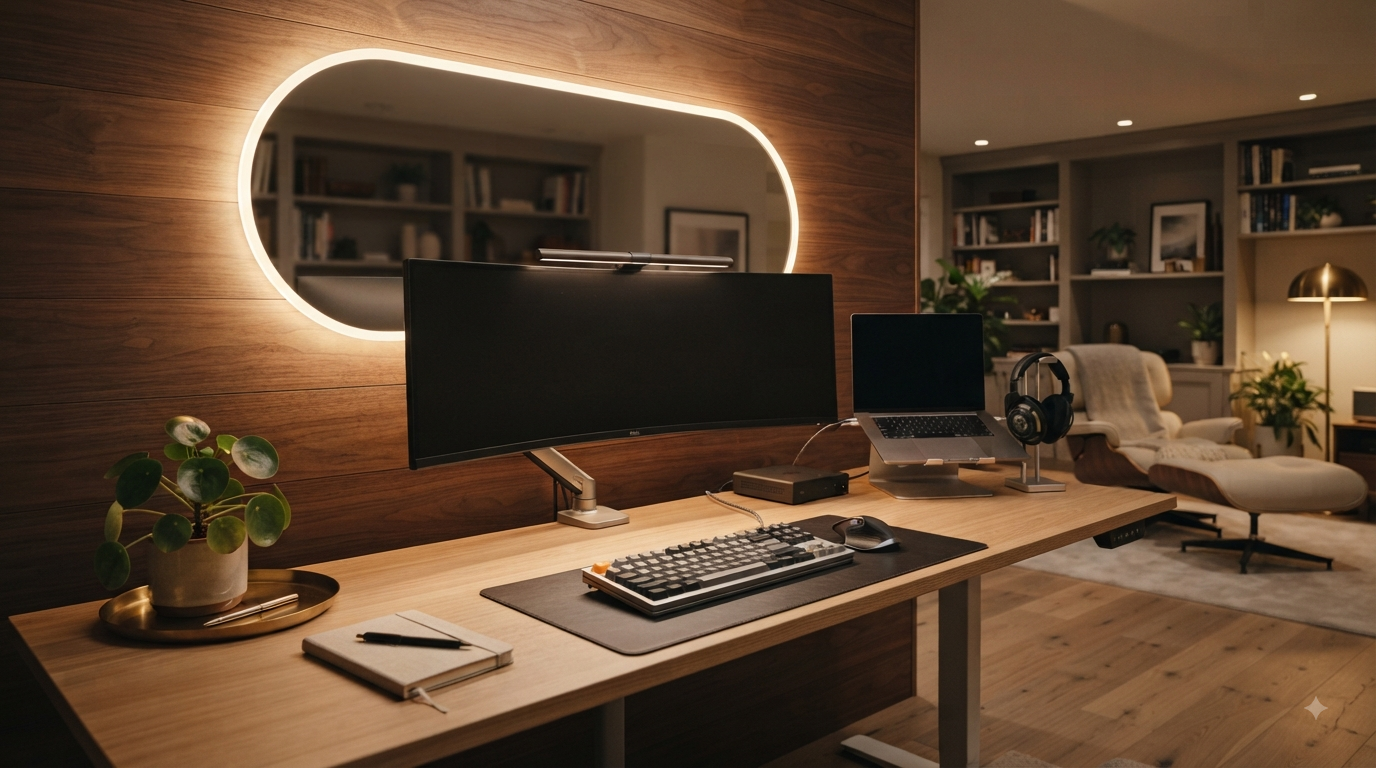
- Size and Shape: Arched, pill-shaped, and organic asymmetrical mirrors dominate modern workspace aesthetics, softening the harsh geometric lines of monitors and tech gear. A width between 50cm and 70cm usually proportionalizes well against a standard 27-inch monitor setup.
- Color Temperature Control (CCT): Opt for mirrors featuring adjustable Kelvin ratings (typically ranging from warm 3000K cozy evening tones to crisp 6000K daylight simulation).
- Dimmability and Memory Function: Seamless touch sensors that remember your preferred brightness level prevent tedious readjustments every time you power on your station.
- Anti-Fog Feature: While primarily designed for bathrooms, anti-fog tech often points to higher overall build quality and superior glass sealing, ensuring long-term durability in home environments.

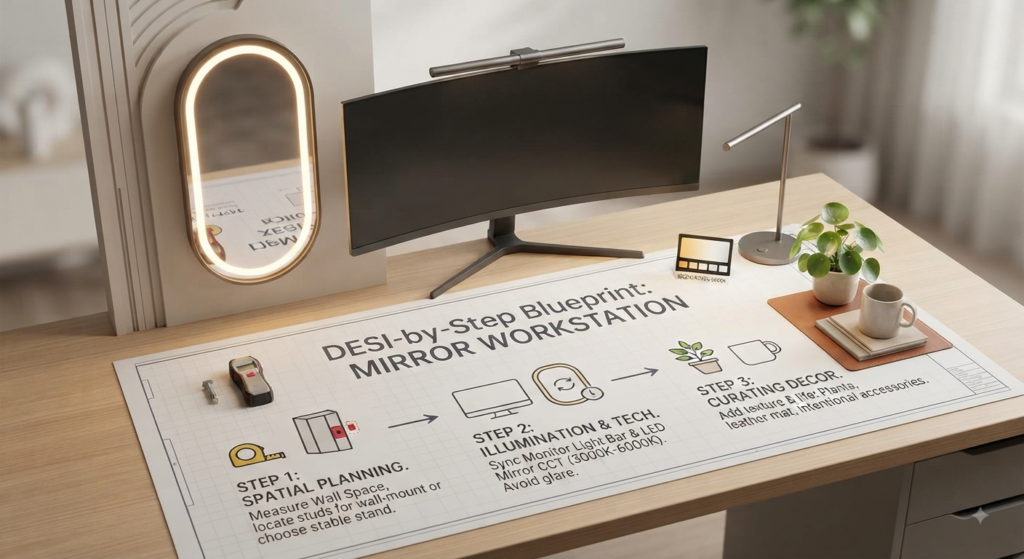
3. Step-by-Step Blueprint: Designing Your LED Mirror Workstation
Executing a Pinterest-worthy, highly functional setup requires a strategic sequence. Follow this step-by-step framework to bring your vision to life:
Step 1: Spatial Planning and Wall Integrity
Determine whether your LED mirror will be wall-mounted or desk-supported (stand-mounted).
- Wall-mounting creates a floating illusion, freeing up precious square inches on your desktop for journals, keyboards, and decorative accents. Ensure you locate studs or use heavy-duty drywall anchors, as high-end mirrors feature thick safety glass and aluminum frames.
- Stand-mounted options offer flexibility, allowing you to reposition the mirror without leaving hardware marks on your walls—ideal for renters or frequent layout reconfigurators.
Step 2: Integrating Technology and Illumination
Position your monitor and LED mirror to avoid direct backlighting glare.
- If the mirror faces your primary monitor, ensure the mirror’s brightness can be dimmed during intensive screen work to prevent optical fatigue.
- Sync your lighting ecosystem. Use smart desk lamps or ambient LED light strips behind your monitor that match the color temperature of your mirror for a cohesive visual gradient.
Step 3: Curating the Decor and Accessories
An aesthetic desk relies heavily on intentional styling. Avoid clutter while celebrating texture:
- Organic Elements: Incorporate a small potted plant (such as a Pothos, Snake Plant, or a minimalist bonsai) to bring life into the space. The vibrant green pops brilliantly against illuminated glass.
- Textural Contrast: Pair cold metallic or glass surfaces with warm elements like a leather desk mat, a knitted throw blanket draped over an ergonomic mesh chair, or a fluted wood accent tray.
- Stationery and Scents: Keep luxury minimalist stationery (such as a linen-bound notebook and a brass pen) alongside a subtle reed diffuser or amber-jar candle to engage multiple senses.
4. Understanding Search Value and Audience Intent
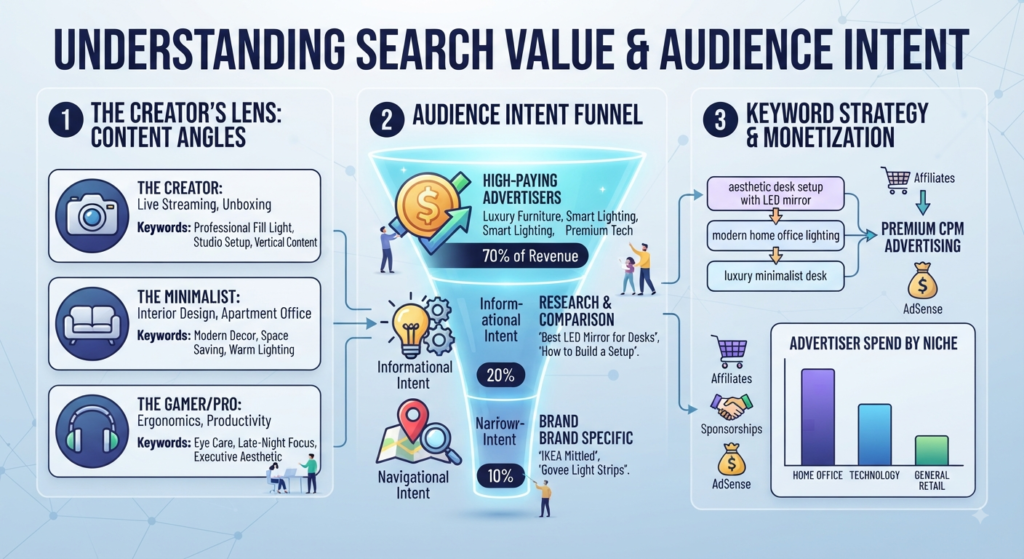
For digital content creators, bloggers, and niche site owners operating in the home office and workspace aesthetics vertical, covering this topic unlocks exceptional commercial potential.
Why Niche Workspaces Attract Premium Engagement
Advertisers in the home decor, ergonomic furniture, and smart lighting sectors are willing to pay premium cost-per-mille rates because the audience consists of high-intent buyers with disposable income. Queries centered around home office transformations, premium lighting, and executive aesthetics attract high-paying commercial advertisers—ranging from ergonomic chair brands to boutique lighting designers and smart-home ecosystem providers.
Strategic Content Angles for Maximum Reach
When expanding content around this topic, address diverse reader intents to capture organic search traffic effectively:
- The Creator Angle: Focus on how an LED mirror serves as an exceptional front-facing fill light for live streaming, unboxing videos, and short-form vertical content creation.
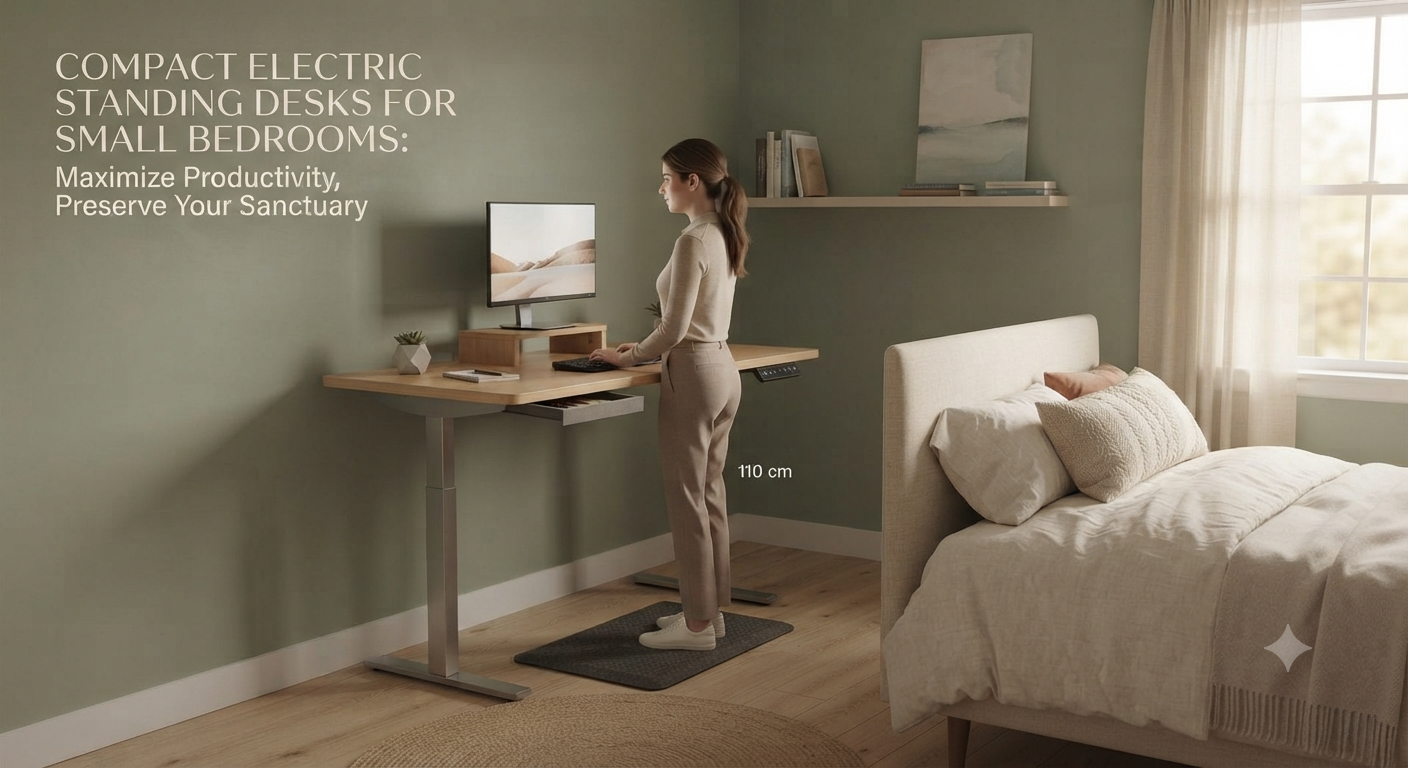
- The Minimalist Interior Design Angle: Explore how reflective glass and warm perimeter lighting open up cramped apartment offices or small bedroom workstations.
- The Ergonomic Wellness Angle: Emphasize how reducing harsh overhead glare protects eyesight during long hours of digital work or late-night study marathons.
5. Ergonomics and Eye Care: Balancing Beauty with Wellness
While visual appeal drives initial engagement, true longevity in a workspace depends entirely on ergonomics and optical comfort. An improperly lit desk can cause chronic eye strain, headaches, and poor posture.
Optimizing Light Levels for Different Tasks
- Deep Work / Coding / Writing: Set your LED mirror to a neutral white (4000K–4500K) at a lower intensity level so it acts as soft ambient fill rather than a competing light source. Pair this with a dedicated, flicker-free desk lamp focused strictly on your keyboard or writing surface.
- Content Creation / Live Streaming: Crank the brightness up and select a crisp daylight setting (5000K–6000K). This eliminates facial shadows, provides professional front-facing fill light for video calls or content creation, and enhances camera sensor performance.
- Evening Wind-Down: Shift the color temperature down to a warm amber glow (2700K–3000K). Reducing blue light exposure late in the evening promotes healthy circadian rhythms and better sleep hygiene.

6. Maintenance and Upkeep: Keeping Your Reflection Pristine
A glass and metal setup requires meticulous care to maintain its luxury appeal. Dust, fingerprints, and smudges are glaringly obvious under the direct illumination of an LED frame.
- Microfiber Discipline: Keep a dedicated ultra-fine microfiber cloth on hand. Avoid paper towels or abrasive cloths that can micro-scratch specialty anti-glare or tinted glass coatings.
- Ammonia-Free Cleaners: Always use ammonia-free glass cleaners or a 50/50 mixture of distilled water and isopropyl alcohol to protect the silver backing and the electronic frame seals.
- Cable Health Checks: Periodically inspect power adapters, touch-sensor wiring, and plug connections hidden behind your desk to ensure zero electrical wear.

7. Psychological and Environmental Benefits of an Illuminated Desk
Beyond the physical utility and photographic appeal, structuring your desk environment around intentional illumination profoundly shifts cognitive performance. Environmental psychology demonstrates that lighting directly influences mood regulation, stress hormones, and perceived workspace comfort.
When you sit down at a desk featuring a balanced, dimmable LED mirror:
- Ritualistic Transition: Switching on the mirror’s backlight acts as a psychological trigger, signaling to your brain that it is time to transition into a state of deep focus or creative flow.
- Elimination of Tunnel Vision: Standard monitor setups cast light solely onto your face from the front, causing fatigue. Ambient fill light from a side or rear-mounted mirror softens the contrast between bright screens and dark rooms.
- Personalization as Anchor: A workspace that reflects your personal taste reduces burnout. Being surrounded by curated elements—clean glass, warm wood textures, and balanced lighting—transforms work from a chore into an engaging ritual.

8. Conclusion: The Future of Hybrid Workspaces
The integration of an aesthetic desk setup with an LED mirror represents the ultimate fusion of form and function. By thoughtfully combining layered illumination, smart ergonomics, and intentional decor, you transform a standard workstation into an inspiring sanctuary of productivity and personal expression. Whether you are editing high-resolution video content, managing complex digital campaigns, or simply enjoying a quiet morning coffee while reviewing your daily schedule, an illuminated workspace elevates every moment spent at your desk. Curate with intention, invest in quality components, and watch your daily workflow reach unprecedented heights of creativity and comfort.