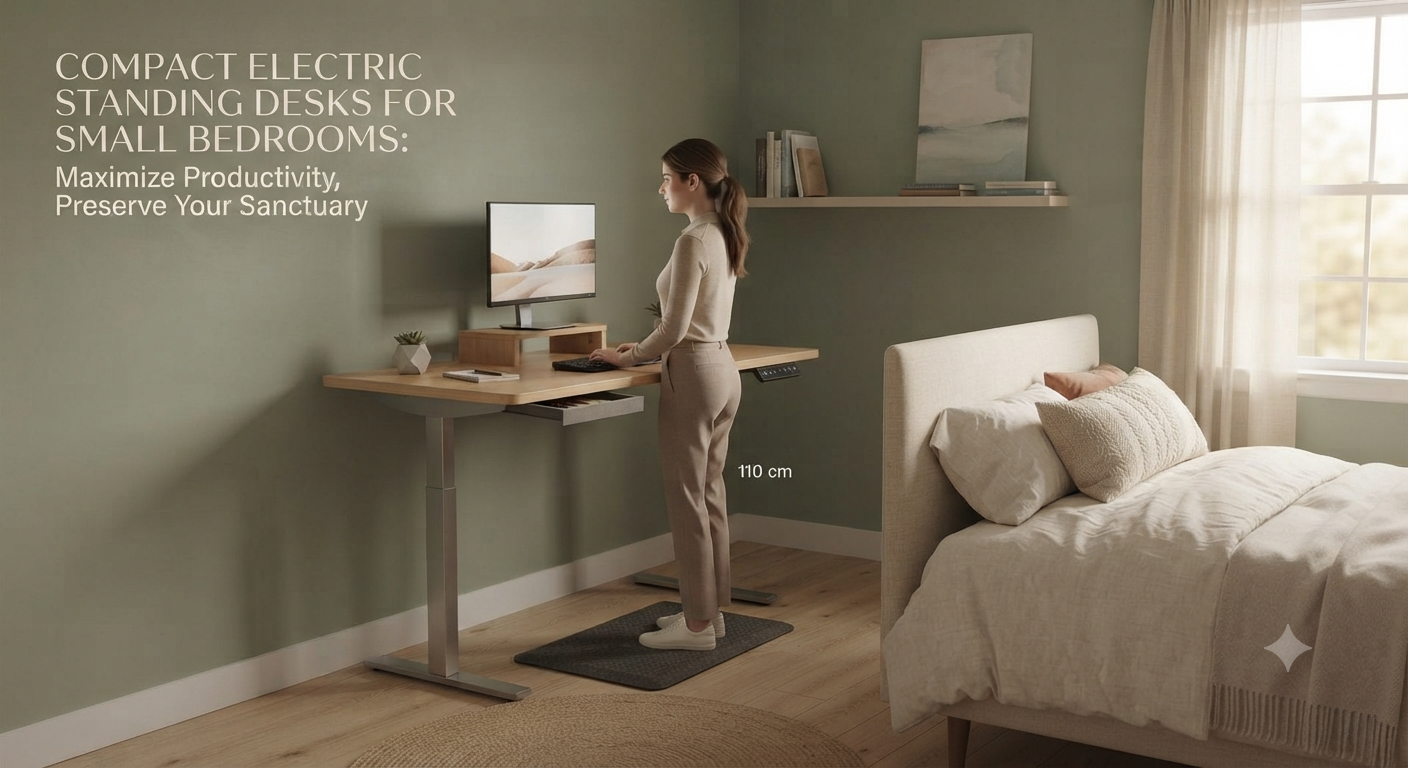
The evolution of the modern home office represents a profound shift in how we conceptualize professional life. Over the past decade, workspace design has transitioned from cluttered, utilitarian corners into curated sanctuaries of intentional living, wellness, and high productivity. We invest heavily in our visual environments: selecting ergonomic chairs engineered for spinal alignment, sourcing solid-wood standing desks with smooth dual motors, installing warm-toned bias lighting, and cultivating minimalist deskscapes free of plastic clutter.
Yet, as our home offices grow visually pristine, we frequently overlook an invisible disruptor that silently drains our cognitive energy every single working hour: acoustics.
Hardwood and luxury vinyl flooring, expansive glass windows, bare minimalist walls, and sleek metal-and-glass tabletops create a stunning aesthetic, but they are acoustic nightmares. They form hard, reflective boundary surfaces that cause sound waves to bounce endlessly around the room. This creates a subtle, low-grade flutter echo, room resonance, and reverberation that fatigues the human brain over extended periods.
Enter the minimalist acoustic desk panel. Far removed from the industrial, utilitarian, and unsightly foam pyramids of professional recording studios, today’s acoustic desk panels are sophisticated, design-forward architectural elements tailored specifically for the modern professional. They merge high-performance sound absorption with clean, understated aesthetics, helping you reclaim your focus, elevate your virtual meeting presence, and optimize your workspace ecosystem.
1. The Invisible Productivity Killer: Understanding Workspace Acoustics
To understand why acoustic desk panels are rapidly becoming a mandatory staple for high-end home offices, we must first examine how sound behaves within confined residential spaces.
The Physics of Room Resonance and Flutter Echo
When you speak, type on a mechanical keyboard, click a mouse, or listen to audio from desktop speakers, sound waves radiate outward in all directions at roughly 343 meters per second. In an untreated room with hard surfaces, these sound waves strike walls, floors, and ceilings, bouncing back into the room rather than being absorbed.
When sound waves bounce repeatedly between two parallel hard surfaces (such as a bare wall and a glass-top desk), they create a phenomenon known as flutter echo. While you may not consciously notice a continuous echo, your brain is constantly working overtime in the background to process, filter out, and dismiss these ambient reflections.
This background auditory processing consumes precious cognitive bandwidth, leading to a condition known as cognitive auditory fatigue. By midday, you may feel inexplicably drained, irritable, or unable to sustain deep focus—not because of your workload, but because your nervous system has been subconsciously fighting a constant battle against acoustic noise pollution.
The Hybrid Work Broadcasting Studio
The rise of remote and hybrid work models means our home offices are no longer private spaces used solely for quiet writing or data entry. They are active broadcasting studios.
Whether you are leading a high-stakes virtual client pitch, recording a podcast, participating in cross-functional video conferences, or collaborating on Slack huddles, audio clarity dictates professionalism. Poor room acoustics cause microphones to capture a muddy, hollow, and reverberant sound. When clients or colleagues have to strain to understand your words, it subtly undermines your authority and executive presence.
Key Takeaway: Minimalist acoustic desk panels establish an immediate “acoustic shadow” right where you need it most—directly in front of your workspace—capturing high- and mid-frequency sound waves at their source before they can bounce into your microphone or reflect back into your ears.

2. Anatomy and Engineering of High-End Acoustic Panels
To integrate seamlessly into a luxury desk setup, an acoustic panel cannot merely be a piece of foam wrapped in fabric. It requires precise material engineering and thoughtful structural design. High-end minimalist acoustic desk panels are built upon three core pillars: material density, structural integrity, and mounting versatility.
Materials That Define Modern Acoustics
- High-Density Polyester (PET) Felt: Composed largely of recycled post-consumer plastic bottles, PET felt is the gold standard of contemporary architectural acoustics. It possesses a rigid yet tactile felt texture that absorbs sound waves efficiently while maintaining its structural shape without requiring a heavy internal wooden or metal frame.
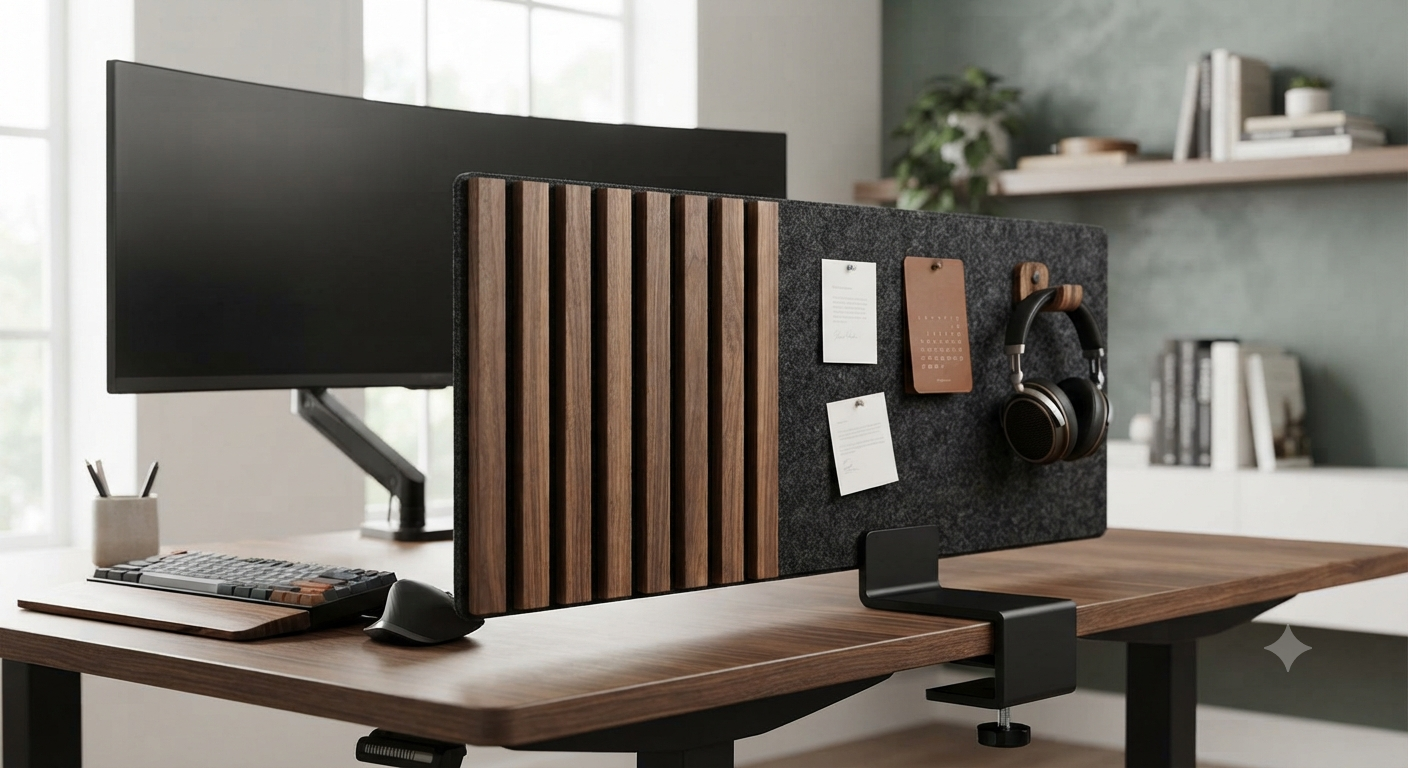
- Sustainably Sourced Wood Slat Accents: Inspired by high-end Scandinavian and Japanese interior architecture, many premium panels feature vertical wood slats (crafted from real oak, walnut, or black ash) mounted over a dense black acoustic felt backing. This introduces biophilic warmth and natural wood textures while simultaneously scattering and trapping sound waves.
- Natural Cork and Acoustic Fabrics: For softer, tactile work environments, compressed natural cork and specialized acoustically transparent woven fabrics provide exceptional dampening capabilities while doubling as functional tack boards.
Understanding the Noise Reduction Coefficient (NRC)
When evaluating acoustic desk panels, manufacturers rely on the Noise Reduction Coefficient (NRC), a standard rating ranging from 0.0 to 1.0 that measures how much sound a material absorbs:
- An NRC rating of 0.0 means the material reflects 100% of sound and absorbs none.
- An NRC rating of 1.0 means the material absorbs 100% of sound and reflects none.
Premium minimalist desk panels typically feature an NRC rating between 0.75 and 0.85. This means the panel absorbs roughly 75% to 85% of the sound energy that strikes its surface, dramatically dampening flutter echoes in small-to-medium rooms without making the space sound unnaturally “dead” or hollow.

3. Design Aesthetics: Marrying Form and Function
The primary failure of traditional soundproofing materials was their utilitarian ugliness. Egg-crate studio foam, thick fiberglass wedges, and rubberized mats screamed “basement band practice,” instantly destroying any hope of maintaining an executive, sophisticated interior aesthetic. Minimalist acoustic panels, however, are designed from the ground up as high-end interior objects.
The Japandi and Scandinavian Influence
Modern desk panels lean heavily into Japandi (Japanese-Scandinavian fusion) and minimalist design principles. Their visual language relies on:
- Monochromatic and Earthy Palettes: Charcoal grays, warm sand tones, muted olives, deep blacks, and natural wood grains that anchor the desk landscape and complement high-end office furniture.
- Vertical Rhythm: The use of clean, slender vertical slats draws the eye upward, creating a visual sense of height and openness even on compact desks.
- Seamless Hardware Integration: Rather than requiring permanent wall damage, construction adhesive, or bulky brackets, modern desk-mounted acoustic screens attach via sleek, heavy-duty C-clamps or edge-mounting brackets. They appear to float effortlessly above the back edge of the desk.
Dual-Purpose Utility in Tight Spaces
Beyond pure sound absorption, a well-engineered desk panel serves multiple workflow functions:
- Visual Privacy and Psychological Zoning: In open-plan homes, shared living spaces, or dual-purpose rooms, a vertical felt screen creates an instant psychological boundary, signaling to family members or housemates that you are in a state of deep work.
- Accessory Management and Organization: Many high-density PET felt panels double as functional pegboards or pinnable surfaces. This allows you-to hang headphone stands, calendar cards, pen cups, and memo clips directly onto the vertical plane, freeing up precious square inches of desktop real estate.
4. Comprehensive Taxonomy of Minimalist Acoustic Desk Panels
Selecting the ideal acoustic panel requires analyzing your specific room layout, desk configuration, and daily operational workflow. Here is a breakdown of the primary categories available on the market today:
A. The Slatted Wood-Backdrop Panel
- Best For: Executive home offices, content creators on video calls, and rooms with extensive hardwood or tile flooring.
- Why It Works: Combines an architectural acoustic felt backing with real wood slats. It mimics a high-end custom feature wall brought down to desk scale. It provides exceptional mid-to-high frequency absorption while dramatically elevating the luxury quotient of walnut, oak, or white-oak executive desks.
B. The Frameless Solid Felt Screen
- Best For: Ultra-minimalist, tech-forward setups; compact dual-monitor workstations.
- Why It Works: Clean, precision laser-cut edges with zero visible hardware. These panels offer a smooth, uniform surface that acts as a subtle visual backdrop, reducing desktop clutter and serving as a tackable surface for important notes.
C. The Freestanding Acoustic Divider
- Best For: L-shaped desks, sit-stand converter stations, or shared workspace islands where clamping to the desk edge is impractical.
- Best For: Mobile, flexible sound separation that moves smoothly and maintains acoustic integrity regardless of desk adjustments.

5. Step-by-Step Integration Guide: Maximizing Acoustic Performance
Installing a minimalist desk panel is a straightforward weekend upgrade, but optimizing its placement ensures you receive maximum return on your investment. Follow this four-step integration framework:
- Assess Your Primary Reflection Points: Sit in your normal working posture. Sound travels outward from your mouth and your keyboard. Placing the acoustic panel directly in front of your monitor intercepts the primary sound path before it can strike and bounce off the wall behind your desk.
- Determine Optimal Mounting Height: Ensure the top of the panel sits roughly 12 to 18 inches above the desktop surface. This provides an effective barrier for microphone pickup during virtual meetings without blocking your sightline across the room or creating a claustrophobic barrier.
- Secure with Precision Clamps: Use padded C-clamps that protect your desktop material (whether solid wood, premium veneer, or high-pressure laminate). Ensure the panel is level and rigid so it does not wobble during intense typing sessions.
- Layer Your Acoustic Ecosystem: While a desk panel solves the immediate workspace zone, complete the minimalist look by incorporating subtle complementary elements—such as an area rug under your desk chair or linen Roman blinds on nearby windows—to create a completely balanced auditory environment.

6. Frequently Asked Questions
Will an acoustic desk panel completely soundproof my home office?
No. Acoustic panels are engineered for sound absorption, not soundproofing. They reduce echo, flutter reverberation, and microphone reflection inside the room. They will not block heavy external noises like construction work, barking dogs, or street traffic (which require mass-loaded vinyl, double-pane windows, or solid core doors). However, they dramatically improve the internal acoustic quality and vocal clarity of your space.
Can I attach heavy items to acoustic felt panels?
Most high-density PET felt panels can support lightweight accessories like sticky notes, photos, lightweight calendars, and specialized felt-safe pins. However, they are not structural shelves; avoid hanging heavy ceramic mugs or metal hardware directly onto the felt fabric unless specified by the manufacturer.
Do acoustic desk panels interfere with motorized standing desks?
When properly selected and clamped directly to the stationary desktop surface (rather than the wall), desk-mounted acoustic panels move with your desk as you transition between sitting and standing, making them fully compatible with modern ergonomic sit-stand workstations.
Conclusion: Elevate Your Focus and Workspace Sanctuary
Your home office environment is a physical manifestation of your professional mindset. When visual clutter is eliminated, mental stress decreases. When auditory chaos is tamed, deep, uninterrupted focus takes over.
Minimalist acoustic desk panels represent the intersection of high design and cognitive ergonomics. By absorbing the invisible noise that drains your daily energy while elevating your workspace with rich textures and clean architectural lines, they prove that the most powerful productivity tools are often the ones that bring quiet to the room.
What specific style of desk or monitor configuration are you currently working with in your home office?