The modern home office has transcended its historical role as a mere repository for bills and late-night laptop sessions. Today, for the discerning professional, digital creator, and executive, it is an integrated sanctuary of productivity, architectural intention, and personal style. At the epicenter of this evolution stands the luxury minimalist solid wood desk and bookshelf combo—a powerhouse furniture category designed to anchor sophisticated rooms with organic warmth, clean structural lines, and streamlined elegance.
By merging the expansive, tactile surface of a handcrafted timber desk with the vertical sculptural presence of a matching bookshelf, this unified furniture architecture transforms fragmented home offices into cohesive design masterpieces. This exhaustive first part of our masterclass explores the foundational philosophies, advanced wood science, spatial psychology, and custom ergonomic principles required to curate the ultimate executive workspace.
1. The Philosophy of Luxury Minimalism in Workspace Design
Minimalism in high-end office furniture is frequently misunderstood by casual observers as sterile, cold, or unwelcoming. In reality, true luxury minimalism—deeply rooted in Scandinavian warmth, Japanese Japandi principles, and mid-century functionalism—focuses entirely on stripping away the non-essential to let the intrinsic, breathtaking beauty of premium natural materials take center stage.
Material Integrity: Why Solid Wood Reigns Supreme
In an era dominated by high-density fiberboard (HDF), particle board, and cheap veneers wrapped in synthetic laminates, authentic solid wood stands as the ultimate marker of enduring quality and prestige.
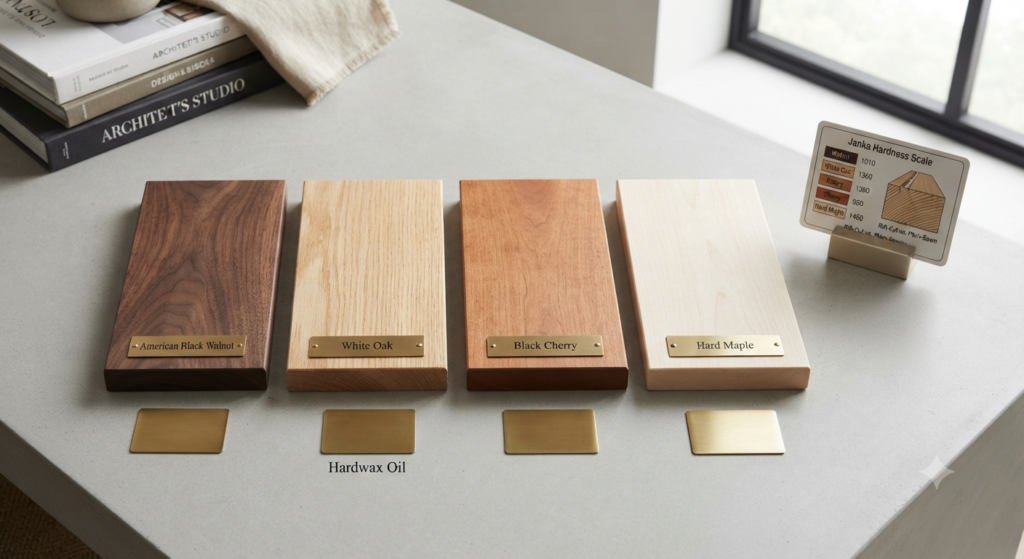
- The Living Finish: Unlike manufactured boards that degrade, chip, and peel over time, genuine hardwoods like American Walnut, White Oak, and Black Cherry develop a rich, lustrous patina as they age. They absorb the history of your work, recording subtle changes and developing character that synthetic materials can never replicate.
- Structural Durability and Weight Capacity: A true desk and bookshelf combo undergoes substantial weight stress. Solid wood offers superior load-bearing capacity for heavy multi-monitor arrays, specialized studio equipment, audio gear, and floor-to-ceiling library weights without sagging, bowing, or warping.
- Acoustic and Tactile Benefits: Natural timber naturally absorbs harsh sound frequencies, softening room acoustics and reducing echo in minimalist rooms characterized by hard flooring and glass windows. Tactilely, the warm, organic grain provides a grounding sensory experience during high-stress professional tasks.
The Power of Integrated Combinations
Traditional offices often suffer from a hodgepodge of mismatched wood stains and conflicting silhouettes—a heavy oak desk paired with an industrial metal shelving unit or a cheap melamine bookcase. A unified combo solves this visual chaos by enforcing absolute harmony:
- Continuous Grain Matching: Master furniture artisans often select timber boards from the same log or flitch to ensure the wood grain flows logically from the worksurface upward into the vertical shelving frame, creating a seamless visual narrative.
- Footprint Optimization: Combos utilize vertical dead space efficiently, freeing up precious square footage on the floor while creating a commanding, built-in architectural look without requiring permanent wall modifications or custom carpentry.

2. Comprehensive Hardwood Selection for Elite Home Offices
Selecting the correct wood species dictates both the mood of your room and the long-term maintenance profile of your furniture investment. Each hardwood carries distinct physical properties and aesthetic personalities.
When sourcing your solid wood combo, always inquire about the milling process. Rift-cut and quarter-sawn boards offer greater dimensional stability than plain-sawn boards, ensuring your desktop and shelves remain perfectly flat across changing seasons.
3. Spatial Psychology and Acoustic Engineering in Deep Work
Your physical environment directly dictates cognitive output and mental well-being. A cluttered, visually heavy office induces micro-stressors that fracture concentration and drain mental energy. A luxury minimalist combo leverages spatial psychology to enhance focus:
- Visual Weight Distribution: By keeping desk profiles slender and utilizing floating or recessed shelving brackets, light flows freely through the room, making even compact home offices feel expansive and breathable.
- Concealed Cable Management Integration: High-end solid wood desks incorporate hidden under-desk raceways, magnetic wire channels, and integrated timber grommets. Keeping power cords entirely out of sight eliminates cognitive friction, allowing your mind to focus purely on the task at hand.
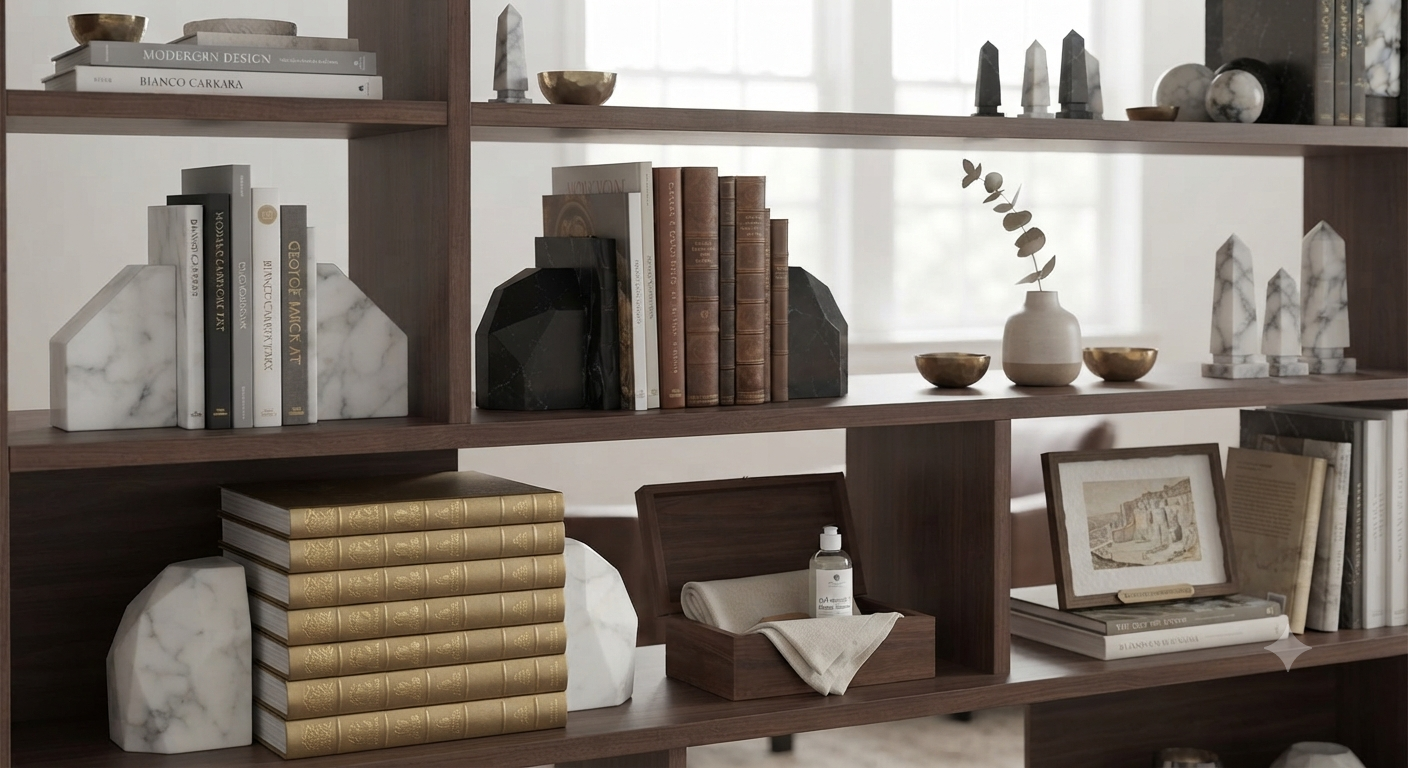
- Vertical Zoning and Cognitive Anchor Points: The bookshelf component allows you to practice the “Rule of Three”—alternating between books arranged by color or spine thickness, intentional negative space, and curated statement objects (such as cast-bronze sculptures, architectural models, or ceramic vessels). This vertical zoning gives the eyes resting places, reducing visual fatigue during long work sessions.

4. Architectural Integration: Planning Your Layout
Integrating a solid wood desk and bookshelf combo requires careful consideration of architectural elements within your room:
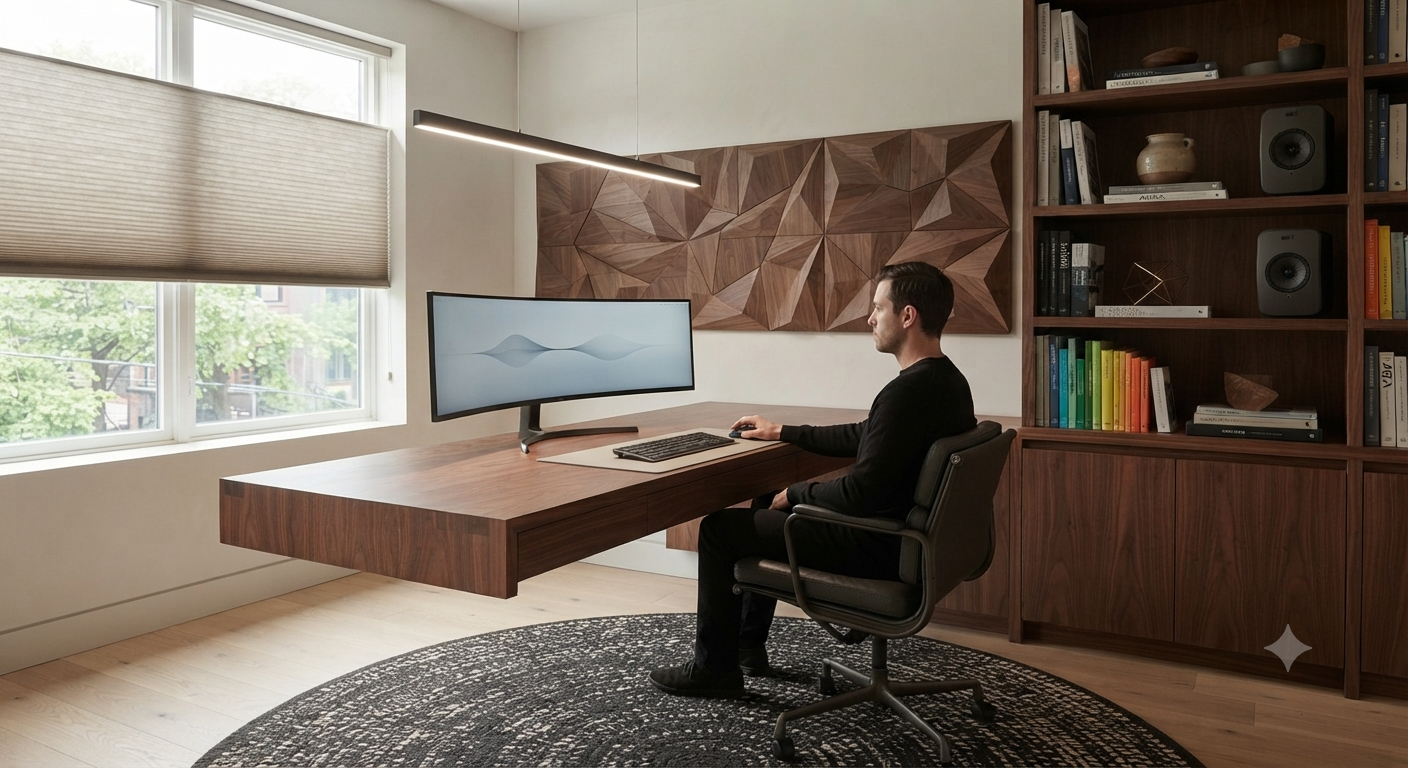
- Natural Light Placement: Position your desk perpendicular to natural light sources (windows) to eliminate screen glare while maximizing ambient daylight on your timber surface.
- Structural Wall Support: If your bookshelf component features wall-anchored or floating modular towers, ensure proper stud location verification to support heavy timber loads safely.

5. Curating the Ecosystem: Styling Your Combo for Maximum Impact
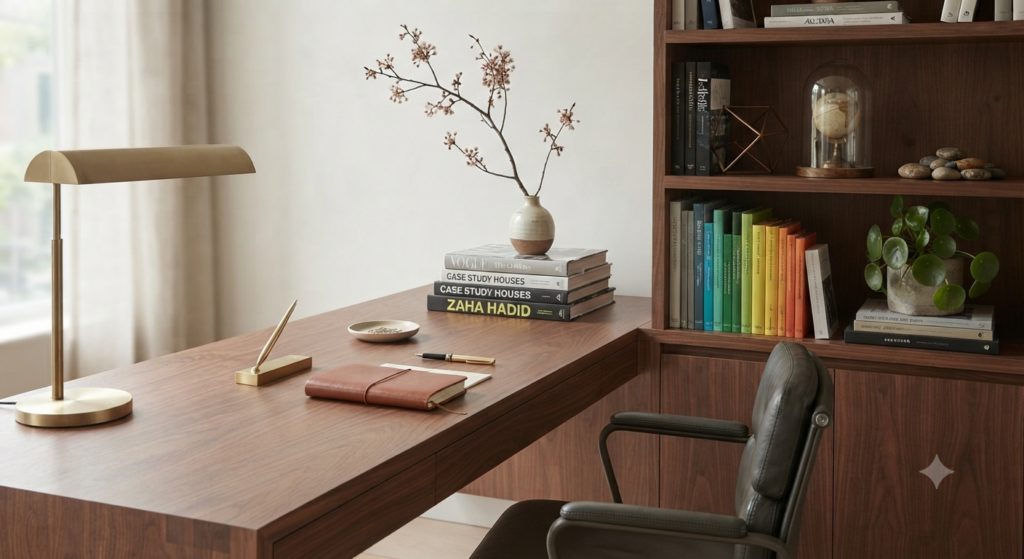
Once your solid wood desk and bookshelf combo is installed, thoughtful styling elevates it from a functional furniture arrangement to an editorial masterpiece. Every item placed on or around the unit should serve either an uncompromising functional purpose or a profound aesthetic one.
The Desk Surface: Less is More
- The Single Focal Point: Allow the natural timber grain to shine as the primary hero of the room. Avoid oversized desk mats or leather pads that cover more than 30% of the worksurface area; hiding gorgeous American Walnut or White Oak grain defeats the purpose of investing in a luxury solid timber desk.
- Ergonomic Lighting: Pair your setup with a matte black, brushed brass, or raw bronze architectural task light (such as classic Artemide, Anglepoise, or Flos designs) that complements the wood hardware and provides glare-free illumination during late-night creative sessions.
- Tactile Analog Elements: Balance digital displays with a heavy, textured paper notebook, a weighted brass pen holder, or a mechanical desk calendar. These tactile objects bridge the gap between high-tech digital productivity and organic calm.
The Bookshelf Component: Curated Elegance
- Layered Depth: Place larger art, design, and architecture books flat on shelves rather than upright, using them as structural risers for smaller decorative objects, vintage brass magnifying glasses, or minimalist ceramic sculptures.
- Breathing Room (Negative Space): Leave at least 25% to 30% of every shelf entirely empty. Negative space is the ultimate luxury in interior design; it prevents visual clutter and highlights your favorite volumes rather than burying them.
- Botanical Elements: Introduce trailing plants like a Philodendron Micans, cascading pothos, or a meticulously pruned potted bonsai on the upper tiers to soften hard vertical lines, bring nature indoors, and dramatically improve indoor air quality.
6. Advanced Maintenance and Preservation of Luxury Timber
Investing in a solid wood desk and bookshelf setup means committing to a lifetime of proactive care. Because wood is a hygroscopic material—meaning it naturally expands and contracts with daily and seasonal changes in indoor humidity—proper maintenance is non-negotiable.
- Climate and Humidity Control: Maintain home humidity levels between 35% and 50% year-round to prevent wood cracking, checking, or joint separation. Keep your combo away from direct, harsh HVAC vents, radiators, and unshielded south-facing windows where intense UV rays can bleach the natural finish.
- Finishing Choices Compared:
- Hardwax Oils (e.g., Rubio Monocoat, Osmo, Odie’s Oil): The undisputed gold standard for luxury minimalist furniture. They penetrate deep into the wood pores rather than sitting as a plastic layer on top, offering a completely matte, velvet-like natural touch while making local scratch repairs remarkably easy without stripping the entire piece.
- Polyurethane and Conversion Varnishes: Offer higher chemical and moisture resistance against accidental coffee spills but create a plastic-like film barrier that masks the organic, warm feel of the wood.
- Routine Cleaning Protocols: Never use generic household chemical sprays, ammonia-based window cleaners, or abrasive scouring pads. Clean surfaces with a slightly damp microfiber cloth followed immediately by a dry buffing cloth. Apply a natural beeswax conditioner every 6 to 12 months to nourish the timber fibers and maintain water-repellent protection.

7. Craftsmanship Indicators and Investment Value
For creators, interior architects, publishers, and e-commerce curators operating in high-value niches like home office design and ergonomic workspace optimization, luxury solid wood combos represent top-tier market potential. High-intent buyers searching for terms like “handcrafted walnut executive desk,” “custom Japandi bookshelf unit,” or “solid hardwood home office systems” exhibit strong purchasing power, driving exceptional appreciation for heirloom-quality pieces.
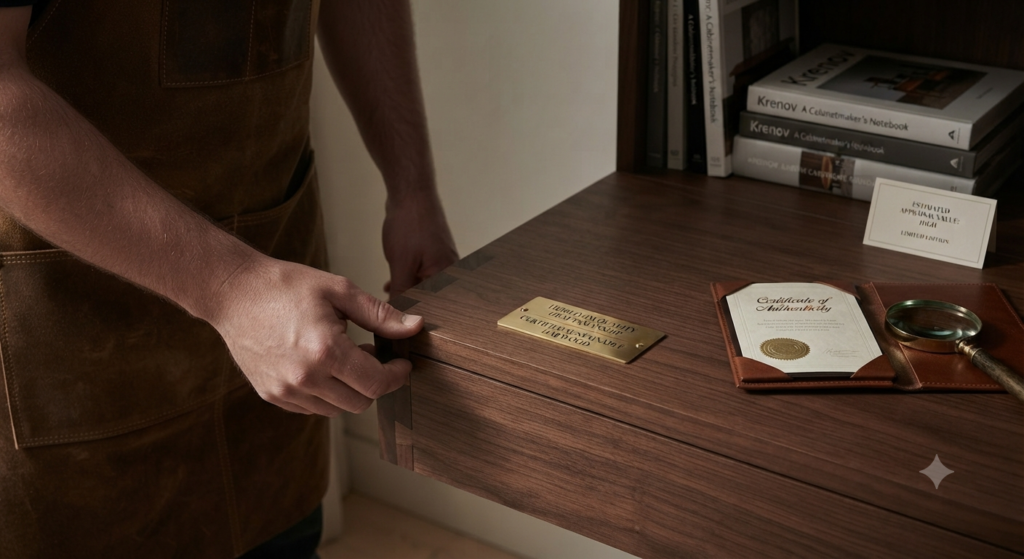
When evaluating pieces for purchase, custom commission, or editorial review, look for master craftsmanship indicators:
- Traditional Joinery: Look for dovetail drawers, mortise-and-tenon frame connections, and biscuit joints. Avoid visible metal brackets, plastic corner braces, or cam-locks on primary structural joints.
- Sustainably Sourced Hardwoods: Prioritize manufacturers who utilize FSC (Forest Stewardship Council) certification, reclaimed old-growth timber, or heritage mills that practice selective, ethical harvesting.
- Modular Scalability: The best modern combos allow you to reconfigure shelf heights, add modular side units, or split components as your spatial needs and office layouts evolve over time.
Conclusion
A luxury minimalist solid wood desk and bookshelf combo is much more than an interior design trend or a temporary workspace upgrade; it is a long-term investment in your daily focus, professional dignity, and living environment. By prioritizing authentic materials, intentional craftsmanship, and clean architectural lines, you build a workspace that inspires deep work, commands respect, and stands the test of time.
Whether you are designing a high-rise executive corner office or a serene sunlit home studio, letting the organic grain of master-crafted timber ground your daily routine is the ultimate definition of modern luxury.