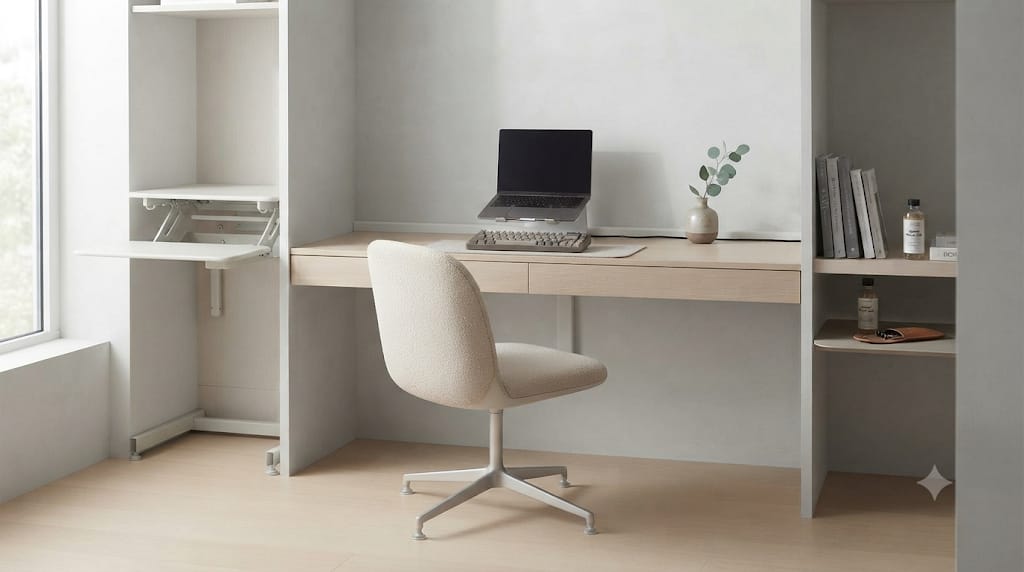
The modern home office is undergoing a quiet revolution. As square footage becomes a luxury and urban dwellings embrace a more intentional, unburdened layout, the spaces we carve out for focus must work harder, look lighter, and take up less physical and visual space. At the epicenter of this shift sits a deceptively challenging design problem: finding a seating solution that honors the tenets of rigorous ergonomics while preserving the serene aesthetic of a compact interior.
Enter the small space minimalist computer chair—an intersection of structural honesty, human-centric engineering, and refined visual restraint.
For years, the market dictated a false dichotomy: you could either have a bulky, orthopedic task monster that dominated your room with plastic levers and neon lumbar pads, or you could choose a delicate, mid-century accent chair that left your lower back aching after forty-five minutes. Today, industrial design has evolved. The contemporary minimalist computer chair proves that structural elegance and spinal health are not mutually exclusive.
1. The Anatomy of Minimalism: Reducing Visual Weight
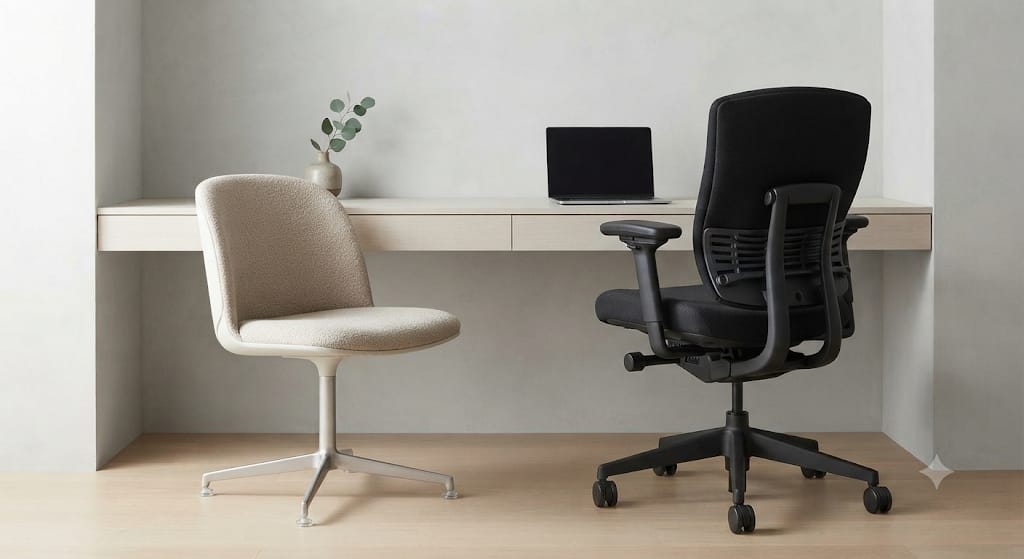
When working with limited square footage, the primary enemy is not physical crowding—it is visual clutter. A room can physically accommodate a bulky chair, but if your eye hits a wall of dark plastic, exposed pneumatic cylinders, and aggressive mesh backing the moment you walk in, the room instantly feels truncated.
Minimalism in seating design relies heavily on the concept of visual weight. To make a compact office chair look and feel like it belongs in a refined studio or a bedroom nook, designers employ specific architectural strategies:
* Monochromatic and Muted Palettes: Traditional black executive chairs absorb light, creating heavy visual anchors. Modern minimalist alternatives utilize soft tones—matte chalk whites, warm greys, oatmeal linens, and muted cashmeres that recede into the surrounding architecture.
* Continuous Silhouettes: The elimination of fragmented parts creates a singular, cohesive flow. By integrating tilt mechanisms and height controls directly into the undercarriage or streamlined shell, the chair transforms from a piece of machinery into a piece of sculpture.
* Refined Base Geometries: Heavy, wide-radius star bases are often swapped for slimline profiles, hubless casters, or architectural four-star sled bases that tuck neatly beneath floating desks.
2. Solving the Ergonomic Equation in Micro-Footprints

Ergonomics is often marketed as a collection of visible accessories—external pillows, protruding knobs, and multi-directional 4D armrests. In a small space chair, true engineering brilliance lies in concealed functionality.
How do you pack healthy lumbar support and dynamic movement into a frame with a fraction of the footprint?
The Shift to Elastomeric Mesh and Flexible Shells
Instead of thick blocks of polyurethane foam that add bulk, high-end compact task chairs use advanced elastomeric mesh or injection-molded flexible polymer shells. Materials like those found on iconic compact silhouettes (such as the Herman Miller Sayl or engineered equivalents) allow the backrest to map dynamically to your spine’s natural curvature without needing an external, adjustable pillow.
* Active-Passive Support: Passive ergonomics relies on the material’s inherent flexibility to respond to your movements. When you shift, lean, or stretch, the frame flexes synchronously, distributing pressure evenly across the lumbar region.
* The Waterfall Seat Edge: In tight spaces, you often shift positions frequently. A contoured waterfall seat edge prevents restricted blood circulation behind your knees, ensuring long-term comfort even when adjustments are kept to a minimum.
3. Spatial Optimization: Key Form Factors to Consider

Selecting the right small-space chair requires an understanding of how you interact with your room throughout the day. Not all compact chairs solve space issues in the same way. Here are the primary structural archetypes dominating modern interior design:
A. The Slim-Profile Task Chair with Flip-Up Arms
For ultra-compact desks—such as those integrated into bedroom corners or hallway alcoves—fixed armrests can prevent a chair from sliding completely under the work surface.
* The Advantage: Chairs featuring independent flip-up arms allow you to push the seat flush against the desk edge, instantly reclaiming two to three feet of floor space when you step away.
* Aesthetic Note: Look for models where the hinge mechanism is internally housed to maintain clean lateral lines.
B. The Armless Architectural Chair
If your workspace doubles as a vanity or an accent desk in a living area, an armless silhouette offers supreme versatility.
* The Advantage: It completely removes visual barriers, allowing light to pass through the room unhindered. It encourages varied sitting postures (including cross-legged sitting for short creative bursts) and slides effortlessly under any surface height.
* The Trade-Off: Best suited for shorter work blocks (2 to 4 hours) or tasks that lean heavily toward creative writing, digital curation, or light emailing rather than marathon spreadsheet sessions.
C. The Executive Micro-Chair
For professionals who require full-day support in a limited room, the micro-executive chair scales down the seat pan width and narrows the backrest profile while retaining a synchronous tilt mechanism and pneumatic height adjustment. It delivers heavy-duty comfort without the imposing scale of traditional corporate furniture.
4. Materiality and Texture: Bringing Warmth to the Home Office

One of the greatest pitfalls of outfitting a small room is letting it look sterile or office-like. Because a compact workspace is often visible from your bed, living room, or dining area, the materials of your computer chair must harmonize with residential interior design trends.
“A minimalist chair is not defined by the absence of features, but by the presence of intention. Every texture must speak to comfort and cohesion.”
Performance Bouclé and Woven Tweed: Moving away from shiny commercial-grade vinyl, modern minimalist seating embraces textured, tactile fabrics that bring warmth and acoustic dampening to small rooms.
Matte Finishes over Polished Chrome: Shiny metal catches light aggressively, drawing the eye and making a tight corner feel chaotic. Matte powder-coated steel frames in black, bone, or soft bronze absorb ambient light, keeping the atmosphere grounded and serene.
Sustainable Woods and Molded Plywood: For a truly organic modern look, molded veneer shells offer structural rigidity while introducing the biophilic benefits of natural wood grain into your daily routine.
5. Strategic Evaluation: How to Choose Your Minimalist Seating

Before committing to a purchase for your compact workspace, run through this tactical evaluation checklist to ensure the piece meets both your aesthetic standards and physiological needs:
Measure Your Clearances: Measure the exact clearance between your desk legs and the floor-to-keyboard tray height. Ensure the chair’s lowest gas-lift setting allows your feet to rest flat on the floor with a 90-degree knee bend.
Audit Your Work Duration: Be honest about your sitting habits. If you work eight hours straight, prioritize flexible mesh backs and synchronized tilt mechanisms over pure aesthetic minimalism. If your desk is a secondary station for 2 to 3 hours of daily planning, lean into sculptural, fabric-upholstered armless designs.
Assess the Pull-Out Footprint: Consider the turning circle. Can the chair roll out smoothly without catching on a nearby rug edge, bed frame, or wall? Compact casters or stationary glides are often superior choices for micro-rooms.
Color Recessions: If your room lacks natural light, choose a chair in a light hue (stone, cream, light ash gray) to bounce light around the room rather than absorbing it.
The small space minimalist computer chair is more than a piece of functional hardware; it is a lifestyle choice. By rejecting the unnecessary bulk of twentieth-century office design, these streamlined seating options prove that you do not need a sprawling corporate corner office to experience ergonomic excellence and visual peace.
By carefully balancing tactile upholstery, hidden mechanical support, and a reduced physical footprint, you can transform the tightest nook into an inspiring sanctuary of productivity. After all, when your physical environment is unburdened by clutter, your mind is free to do its best work.
6. Integrating Smart Ergonomics and Cable-Free Zones in Tight Spaces
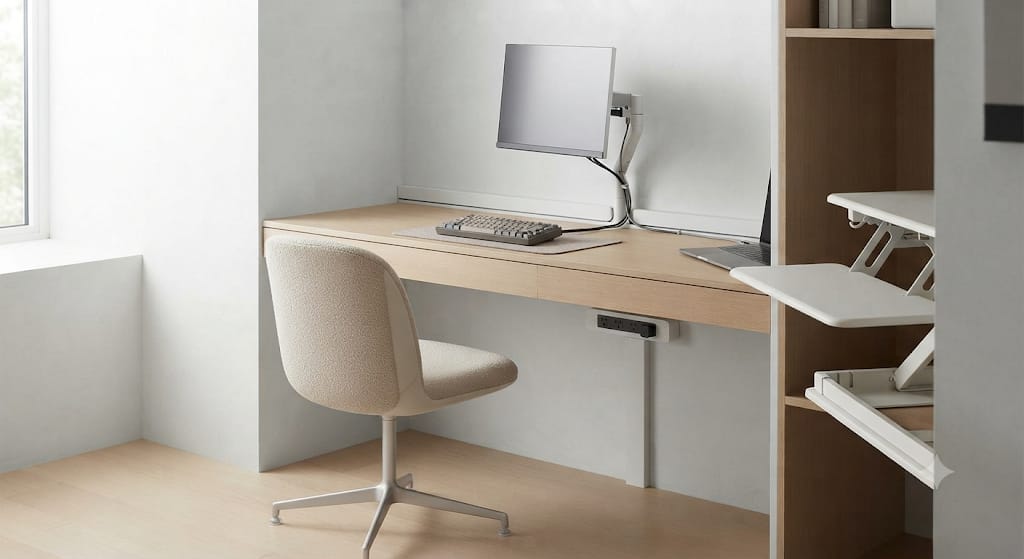
When your workspace is limited, every square inch counts, and the items surrounding your computer chair play a massive role in how functional your setup feels.
The Role of Under-Desk Management: To maintain the clean lines of a minimalist chair, eliminate floor clutter by utilizing magnetic cable raceways and under-desk power strips. A clear floor allows your chair’s casters to glide effortlessly without snagging loose cords.
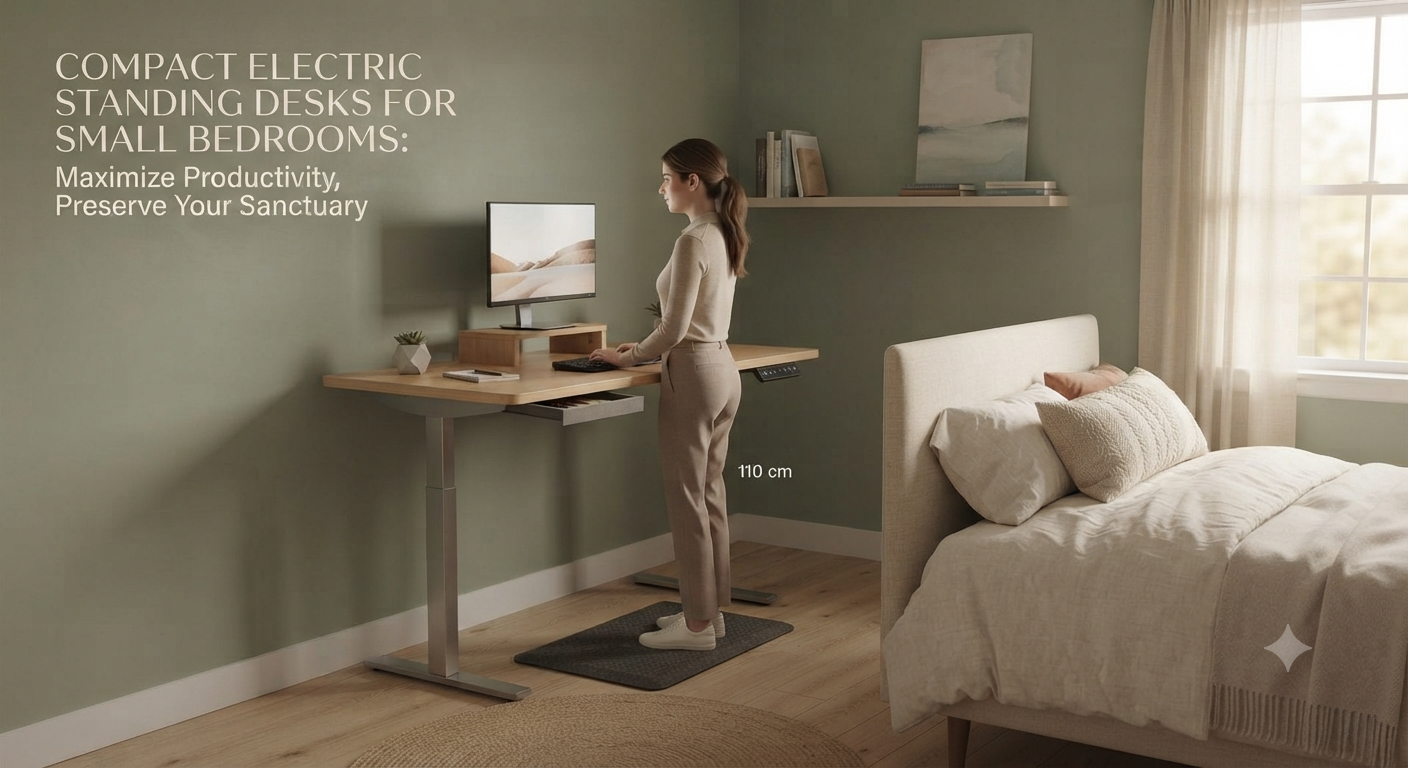
Synchronizing Desk Height: Pair your compact chair with a minimalist sit-stand converter or a slim profile standing desk. Ensuring a smooth transition between sitting and standing prevents sedentary fatigue without adding bulky furniture pieces to your room.
7. Maintenance and Longevity: Preserving Your Minimalist Investment

Compact minimalist chairs often feature delicate mechanisms, exposed tension knobs, or specialized upholstery fabrics that require intentional care to stay pristine over the years.
Fabric and Mesh Care: For woven tweeds, bouclé, or high-tensile mesh, use a soft-bristled vacuum attachment weekly to prevent dust accumulation in the weave fibers. Spot-clean immediately with a mild, water-based detergent to protect performance coatings.
Hardware Maintenance: Inspect and tighten the hex screws beneath the seat pan every six months. Because compact chairs undergo frequent pivoting and tucking movements in tight quarters, minor vibrations can loosen the undercarriage fasteners over time.