The modern remote executive operates at a rare intersection of high-stakes decision-making, relentless digital communication, and strategic oversight. Unlike traditional desk jobs that require routine task execution, executive-level remote leadership demands deep cognitive endurance, unwavering focus, and the capacity to seamlessly transition from a high-pressure board meeting via video conference to long hours of intricate financial modeling or strategic planning.
Yet, the traditional home office—often slapped together with generic big-box furniture and poorly managed technology—fails to support the physical and mental demands of executive leadership. When you are managing multi-million-dollar portfolios, steering corporate strategy, and leading global teams from a residential workspace, your environment must match the gravity of your responsibilities.
Building a luxury ergonomic home office is not merely an exercise in interior aesthetics; it is a vital capital investment in your physical longevity, cognitive performance, and executive presence. This comprehensive blueprint explores how to engineer a high-end, bespoke workspace tailored specifically for the remote executive.
1. The Executive Foundation: Ergonomic Science Meets Bespoke Craftsmanship
For an executive spending upwards of eight to twelve hours a day seated at a desk, ergonomics is the bedrock of productivity. Physical discomfort is a silent cognitive tax. When your lower back aches or your shoulders tighten from poor posture, your brain diverts valuable neurological resources away from strategic thinking to manage physical strain.
The Pinnacle of Seating: The Executive Ergonomic Chair
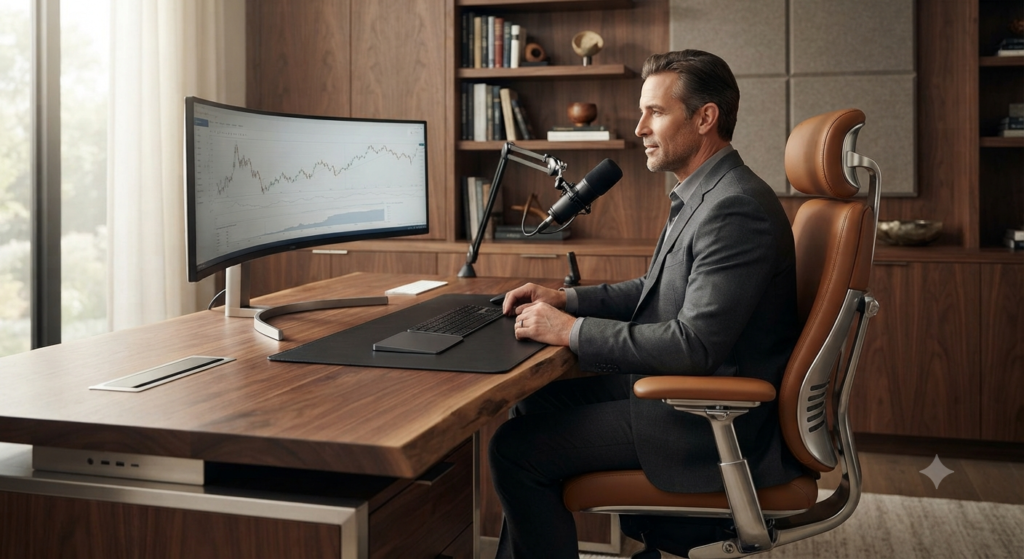
An executive task chair must balance aggressive, clinical-grade adjustability with traditional luxury materials like full-grain Italian leather, polished aluminum, and breathable, high-tensile mesh.
- Multi-Dimensional Adjustability: Look for chairs featuring synchronized tilt mechanisms, adjustable lumbar support that moves dynamically with your spine, 4D armrests (adjustable in height, width, depth, and angle), and a seat-depth slider to accommodate varying leg lengths.
- Aesthetics and Materials: Avoid the plastic, utilitarian look of standard corporate cubicle chairs. Premium manufacturers offer custom upholstery options, such as supple bridle leather or high-performance wool blends that complement high-end residential interior design.
The Standing Desk Evolution: Height-Adjustability with Elegance
The sedentary nature of executive work demands a sit-stand solution, but standard industrial standing desks often look out of place in a sophisticated home study.
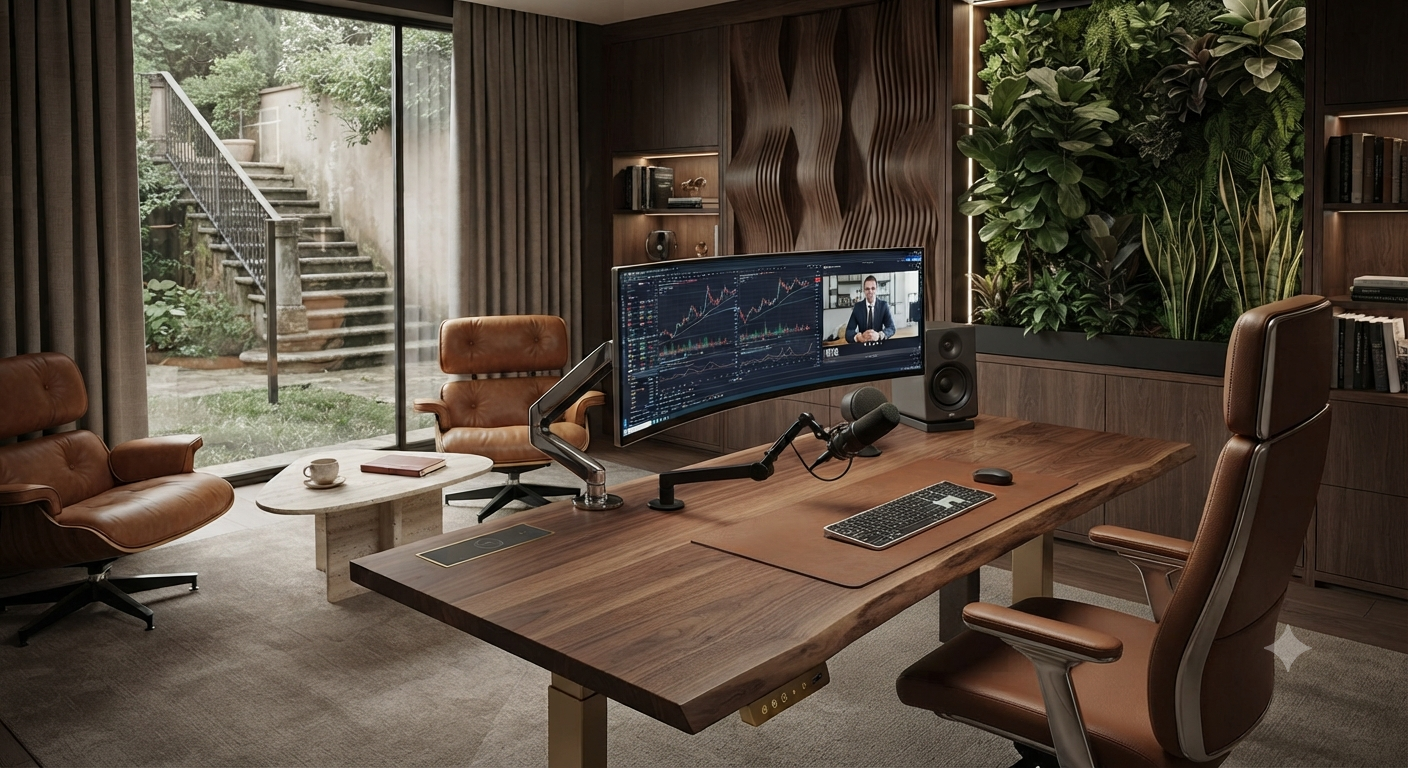
- Solid Wood and Artisan Finishes: Opt for dual-motor lift frames concealed within handcrafted solid wood tops—such as American walnut, ebonized oak, or exotic burl wood. These surfaces offer warmth and character that improve with age.
- Precision and Stability: High-end mechanisms should feature anti-collision technology, whisper-quiet dual motors, and programmable memory keypads flush-mounted into the underside of the desk surface to preserve clean lines.
2. Acoustic Architecture: Soundproofing Your Command Center
For a remote executive, professional audio fidelity and uninterrupted focus are non-negotiable. Whether you are negotiating a merger, addressing the board of directors, or speaking with media outlets, background noise is an immediate threat to your executive persona. True luxury is found in silence and acoustic control.
Layered Sound Absorption
Sound management requires treating the primary surfaces of the room to prevent echo, reverberation, and external noise intrusion.
- Flooring and Textiles: Hardwood floors, while visually stunning, reflect sound waves. Mitigate this by placing a dense, hand-knotted wool rug over a high-grade acoustic carpet pad beneath your executive desk grouping. Hang heavy, floor-to-ceiling draperies made of velvet or lined linen to absorb high-frequency reflections near windows.
- Architectural Wall Treatments: Instead of standard drywall, incorporate custom wood slat acoustic paneling backed by recycled PET acoustic felt. These panels offer a mid-century modern or contemporary architectural aesthetic while drastically reducing room reverberation.
Tactical Privacy Engineering
- Solid Core Doors: Replace hollow interior doors with solid wood or solid-core architectural doors fitted with perimeter acoustic seals and automatic door bottom drops.
- Smart White Noise and Masking: Integrate architectural-grade directional sound masking systems if your home office shares walls with high-traffic household areas.

3. Biophilic Design and Executive Wellness
As workspace design evolves, the integration of nature—known as biophilic design—has shifted from a wellness trend to a core pillar of executive productivity. Natural elements reduce cortisol levels, enhance mood, and sustain mental stamina during grueling work blocks.
Lighting as a Biological Anchor
Lighting in an executive home office must serve two masters: optimal task illumination and biological regulation via circadian rhythm alignment.
- Layered Lighting Scheme: Combine ambient architectural lighting (such as recessed architectural downlights with warm dimming technology), task lighting (a precision-machined brass or matte-black LED desk lamp), and accent lighting (LED strips concealed behind floating shelving or wall panels).
- Tunable White Technology: Install smart lighting systems that automatically shift color temperature throughout the day—from crisp, blue-enriched white light in the morning to stimulate alertness and focus, down to warm, amber tones in the evening to wind down without disrupting melatonin production.
Living Architecture
- Specimen Plants: Move beyond generic potted desk plants. Invest in mature, architectural specimens such as a large-scale Ficus Lyrata (Fiddle Leaf Fig), a sculptural Sansevieria, or a multi-stemmed Kentia Palm planted in handcrafted ceramic or cast-stone vessels.
- Water Features: For those seeking auditory calm, a minimalist, wall-mounted slate water feature can introduce the soothing sound of moving water, masking low-level household distractions.

4. Digital Infrastructure and Executive Technology Integration
An executive workspace must be a technological powerhouse hidden beneath a cloak of minimalist elegance. Cable clutter, visible power strips, and lagging hardware have no place in a luxury office.
Cable Management and Power Architecture
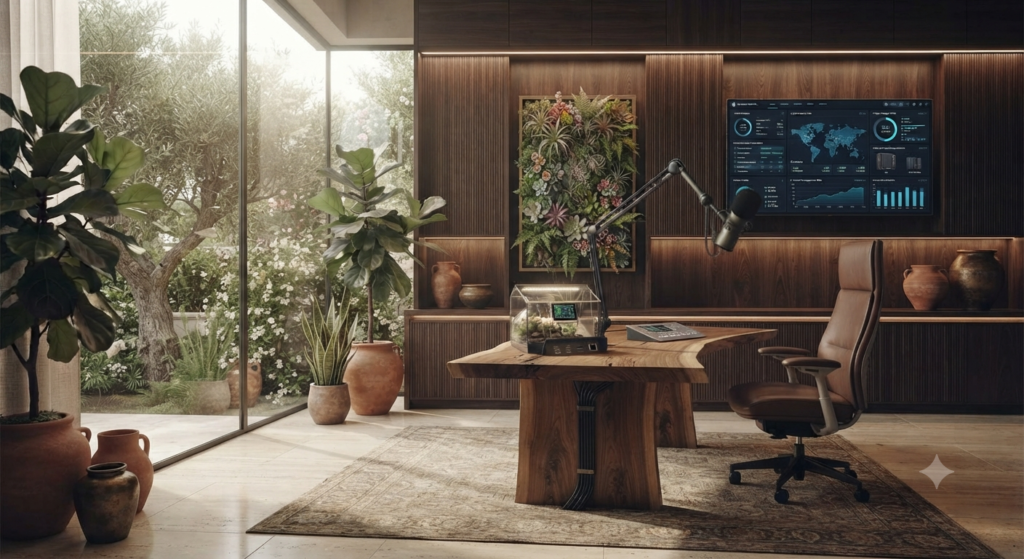
- Integrated Power Hubs: Install flush-mounted pop-up power modules featuring Qi wireless fast-charging pads, USB-C Power Delivery (PD) ports capable of powering high-end laptops, and discreet HDMI passthroughs directly integrated into the desk surface.
- Concealed Routing: Utilize under-desk cable management trays, magnetic spine channels, and dedicated server-grade surge protectors mounted securely out of sight to ensure zero visible wiring.
High-Performance Display Ecosystems
- Ultra-Wide or Multi-Monitor Simplicity: Replace a chaotic array of mismatched monitors with a single, curved 38-inch to 49-inch ultra-wide curved display, or dual matching 4K displays mounted on a sleek, gas-spring articulating arm finished in polished aluminum.
- Studio-Grade Audio/Visual Conferencing: Equip your office with a dedicated 4K PTZ (Pan-Tilt-Zoom) camera, an external broadcast-quality microphone on a low-profile boom arm, and studio-monitor speakers for crystal-clear client interactions.
5. Storage, Organization, and the Art of Concealment
Clutter is the enemy of executive clarity. A workspace that reflects high status must feature intentional, concealed storage solutions that keep daily operational tools accessible yet entirely out of sight when not in use.
Bespoke Millwork and Floating Architecture
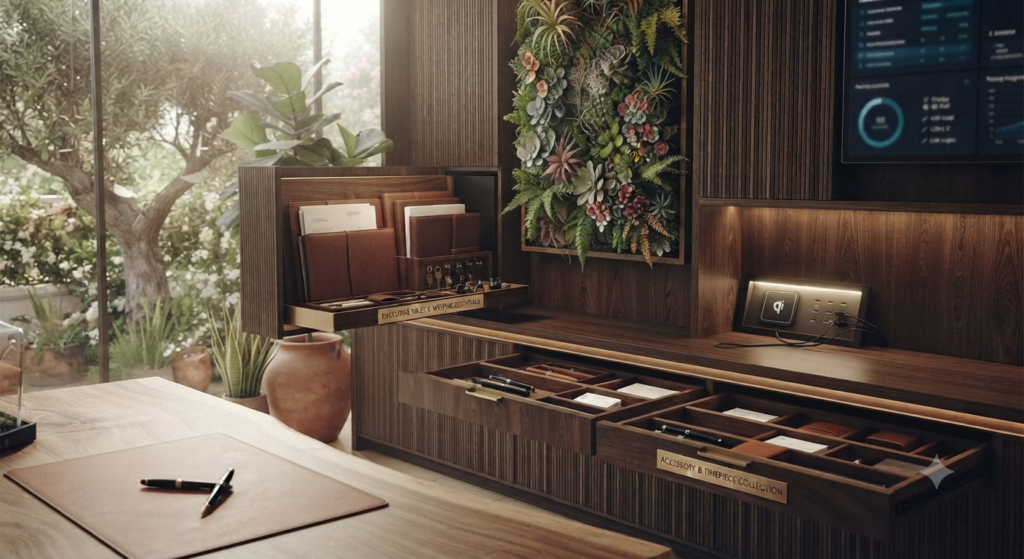
- Built-In Cabinetry: Commission custom floor-to-ceiling millwork featuring book-matched wood veneers, push-to-open hardware, and integrated LED shelf lighting to display curated libraries, art objects, and awards without visual noise.
- Floating Credenzas: Install a wall-mounted floating credenza beneath your main display screen to house network switches, peripherals, physical filing systems, and high-security document storage.
Desktop Minimalism
- Full-Grain Leather Desk Mats: Anchor your primary work zone with an oversized, vegetable-tanned leather desk blotter that protects the wood surface while providing a tactile writing surface.
- Precision Accessories: Utilize solid brass, walnut, or titanium desk organizers for pens, business cards, and daily essentials, maintaining a strict “clear desk policy” at the close of every business day.
6. Curating the Executive Persona: Art and Artifacts
Your home office is frequently broadcast to the world during high-stakes video calls. The background of your workspace is a subtle, powerful extension of your personal brand and executive identity.
Intentional Curation
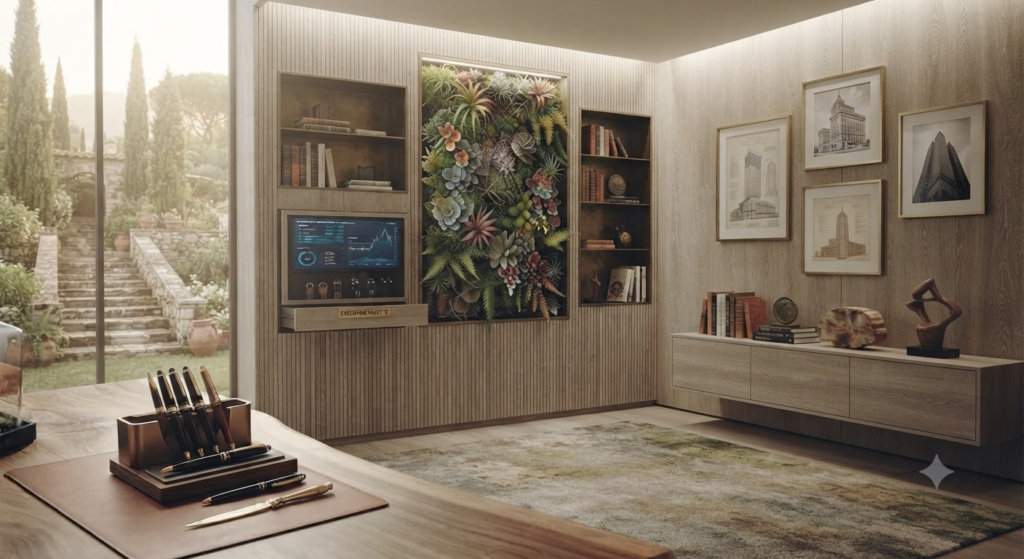
- Artistic Investment: Avoid mass-produced prints. Instead, invest in original contemporary art, striking architectural photography, or culturally significant artifacts framed with museum-grade UV-protective glass. The artwork should reflect your personal tastes while maintaining a sophisticated, non-distracting backdrop for video conferences.
- Curated Libraries: Display physical books arranged logically—not merely for show, but as a reflection of your continuous learning ethos, industry expertise, and intellectual curiosity.
7. The Executive Lounge and Informal Collaboration Zone
Modern executive leadership is not conducted solely behind a desk. A truly comprehensive luxury home office incorporates a secondary zone designed for reading physical documents, reviewing hard-copy contracts, or hosting intimate, in-person strategy sessions with key partners or advisors.
The Seating Pairing
- Lounge Chairs and Occasional Tables: Position two high-end lounge chairs—such as classic mid-century Eames-style loungers or contemporary architectural club chairs upholstered in rich cognac leather or boucle—around a sculptural travertine or solid wood coffee table.
- Focused Task Lighting: Position a floor-standing reading lamp nearby to create a warm, contemplative zone separate from the high-intensity digital environment of the primary workstation.

The Ultimate Investment in Yourself
Designing a luxury ergonomic home office for remote executive leadership is an exercise in intentionality. By harmonizing clinical-grade ergonomics, pristine acoustic architecture, biophilic wellness design, and state-of-the-art technological infrastructure, you create more than just a room—you construct a high-performance sanctuary.
In the realm of executive leadership, your environment either drains your energy or amplifies your capabilities. Investing in a workspace tailored to the rigorous demands of your position ensures that every decision made within its walls is executed from a foundation of absolute comfort, focus, and enduring disti