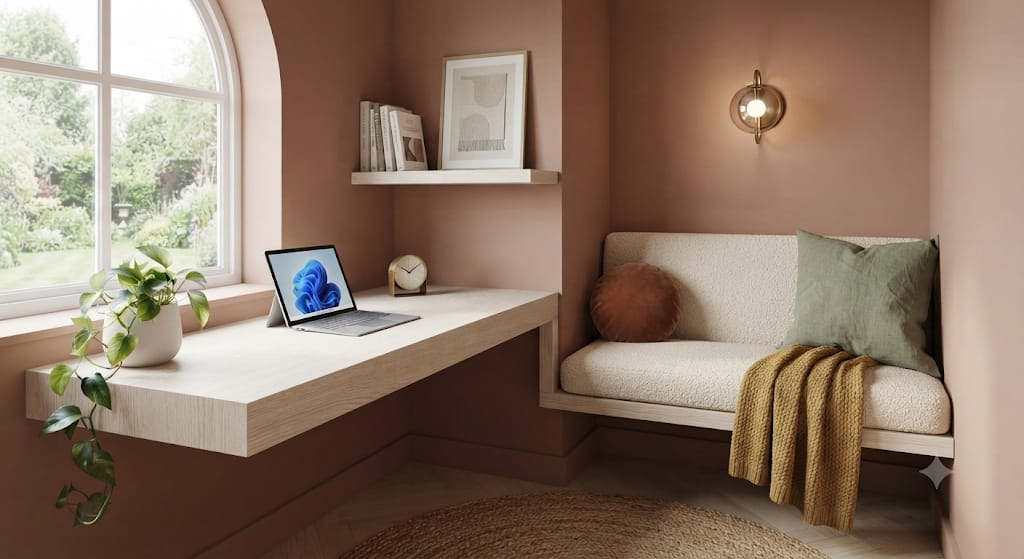
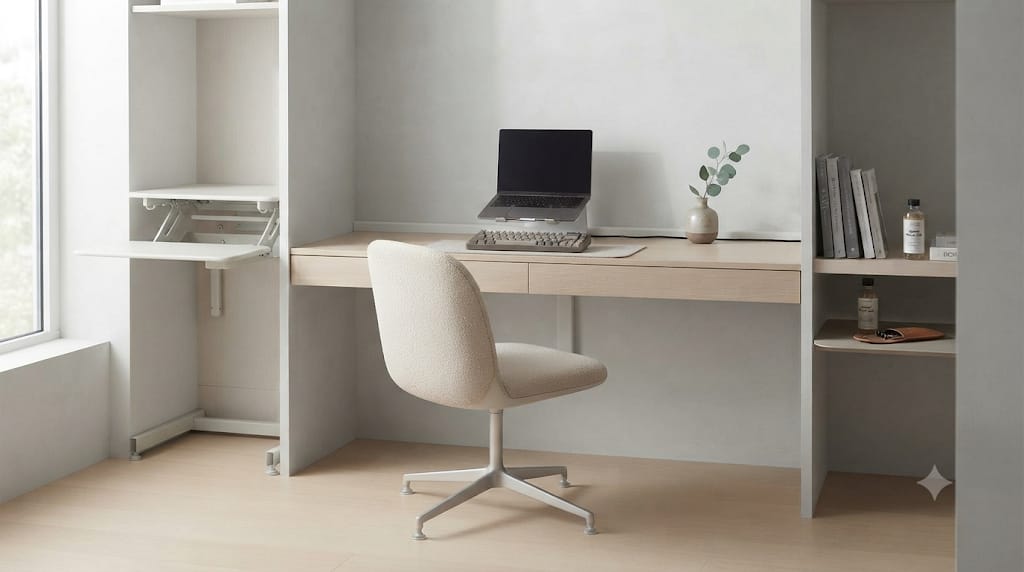
In an age dominated by plastic veneers, flat-pack particle board, and ephemeral office trends, the classic solid wood study desk with built-in storage and drawers stands as an unyielding fortress of craftsmanship, sustainability, and aesthetic depth. When you step into a home office or a dedicated study room anchored by genuine timber, the immediate shift in atmosphere is palpable. The room smells faintly of natural linseed oil or aged oak, the surface feels reassuringly dense under your palms, and the visual weight grounds the entire spatial composition.
For the modern professional, remote worker, dedicated academic, or avid reader, the workspace is no longer a peripheral piece of furniture. It is the command center of daily productivity and creative output. Choosing a workstation built from genuine hardwood—complete with integrated storage cubbies, smooth-gliding drawers, and a meticulously finished desktop—is an investment that pays long-term dividends in durability, health, and mental clarity.1. The Anatomy of True Quality: Understanding Solid Wood vs. Alternatives
Before diving into the functional advantages of built-in storage and drawers, it is critical to address the foundational material. The market is saturated with furniture labeled as “wood,” which often conceals layers of Medium-Density Fiberboard (MDF) or particle board wrapped in a thin paper or vinyl veneer.
1. The Anatomy of True Quality: Understanding Solid Wood vs. Alternatives
Before diving into the functional advantages of built-in storage and drawers, it is critical to address the foundational material. The market is saturated with furniture labeled as “wood,” which often conceals layers of Medium-Density Fiberboard (MDF) or particle board wrapped in a thin paper or vinyl veneer.
Why Solid Wood Prevails
Solid wood furniture means that every visible and structural component—save perhaps for specialized backing panels or drawer bottoms—is milled straight from lumber harvested from deciduous or coniferous trees. This includes prestigious hardwoods such as American Walnut, White Oak, Hard Maple, Cherry, and African Mahogany, as well as dependable softwoods like Pine and Cedar.
- Structural Integrity and Load-Bearing Capacity: Genuine timber handles immense downward pressure without sagging. If you stack heavy art books, dual monitors, or printer equipment on a solid wood surface, the timber maintains its flat plane over decades.
- The Beauty of Aging: Unlike synthetic veneers that peel, chip, and reveal grey composite cores when damaged, solid wood develops a rich patina. Scratches and dents can be sanded out and re-oiled, allowing the desk to accumulate character rather than degradation.
- Healthier Indoor Air Quality: Particle board relies heavily on formaldehyde-based synthetic resins and glues to bind wood dust together. These chemicals off-gas volatile organic compounds (VOCs) into your workspace over years. Solid wood furniture, particularly when finished with natural hard-wax oils, keeps your breathing zone clean and chemical-free.

2. The Psychology of Workspace Organization: Why Storage Matters
Clutter is the silent productivity killer. When loose papers, charging bricks, highlighters, notebooks, and peripherals scatter across your primary writing surface, your brain expends unnecessary cognitive energy filtering out visual noise. A study desk featuring built-in storage and dedicated drawers transforms your workflow by establishing a physical place for everything.
Ergonomic Workflow Zoning
When storage is baked directly into the architecture of your study desk, you can establish three distinct operational zones:
- The Primary Zone: The immediate surface area directly in front of you, reserved exclusively for active tasks—your laptop, an open notebook, or a mechanical keyboard.
- The Secondary Zone: The upper hutch or top shallow drawers, housing frequently accessed tools like pens, sticky notes, planners, and current reading materials.
- The Deep Storage Zone: Lower filing drawers or deep cabinets designed to hide away bulky reference binders, external hard drives, document scanners, and personal items.
By keeping the primary workspace completely clear, you reduce physical friction, minimize distractions, and cultivate a deeper state of “flow” during extended study or work sessions.

3. Selecting Your Timber: A Comprehensive Guide to Hardwood Species
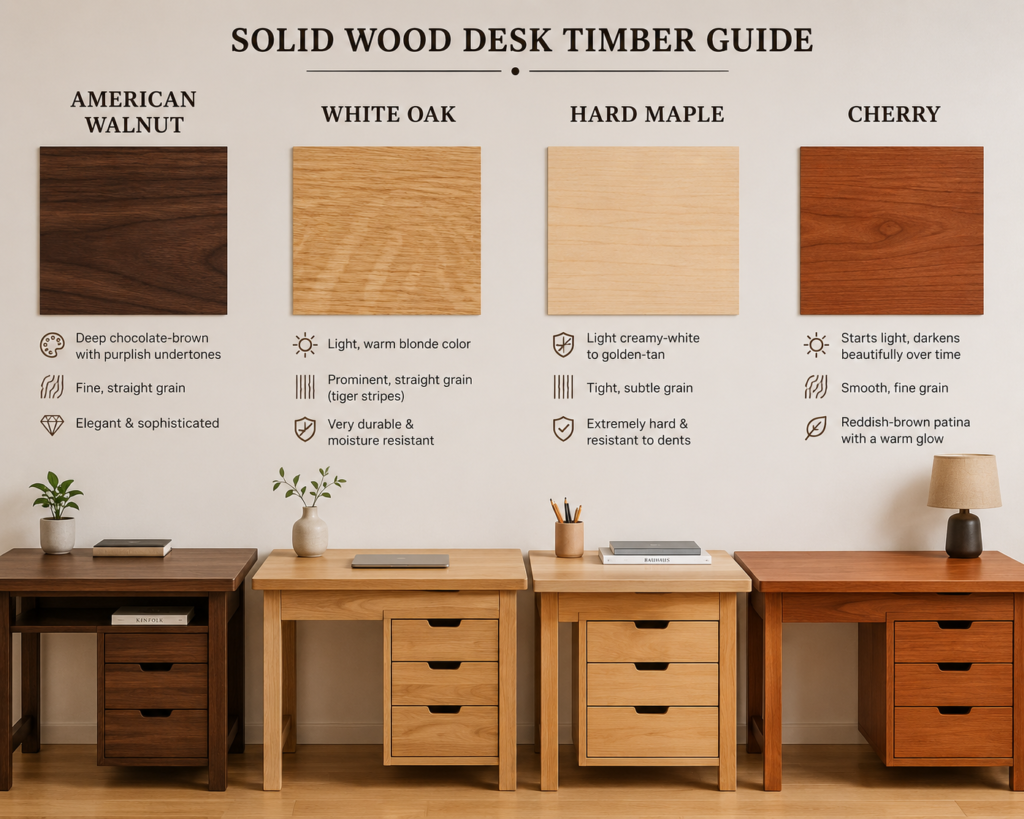
The aesthetic and functional performance of your solid wood study desk depends heavily on the species of timber selected by the artisan or manufacturer. Each wood brings distinct tonal variations, grain patterns, and density ratings.
American Walnut (Juglans nigra)
Valued for its deep, rich chocolate-brown hues and occasional purplish undertones, walnut is the premier choice for luxury home offices. It features a fine, straight grain that accepts finishes exceptionally well. While softer than maple or oak, walnut is remarkably stable and brings an air of mid-century modern sophistication to any interior design scheme.
White Oak (Quercus alba)
If your aesthetic leans toward Scandinavian minimalism or Japandi design, White Oak is the definitive choice. It boasts a prominent, straight grain pattern with unique medullary rays (often called “tiger stripes” when quartersawn). White oak is extremely dense, highly resistant to moisture, and possesses a light, warm blonde color that brightens dark rooms and makes small spaces feel expansive.
Hard Maple (Acer saccharum)
Characterized by its tight, subtle grain and light creamy-white to golden-tan coloring, hard maple is among the toughest domestic hardwoods available. It resists denting and scratching brilliantly, making it an ideal choice for high-traffic student desks where heavy use is guaranteed.
Cherry (Prunus serotina)
Cherry starts out as a light pinkish-brown color but undergoes a dramatic photochemical transformation when exposed to natural light, darkening over the course of a year into a breathtaking, deep reddish-brown patina with a luminous glow.
4. Engineering Ergonomics and Drawer Architecture
A common pitfall of desks with built-in storage is poor ergonomic integration. A poorly designed drawer unit can restrict legroom, force awkward posture, or cause knee clearance issues. When evaluating a solid wood study desk with drawers, inspect the following engineering milestones:
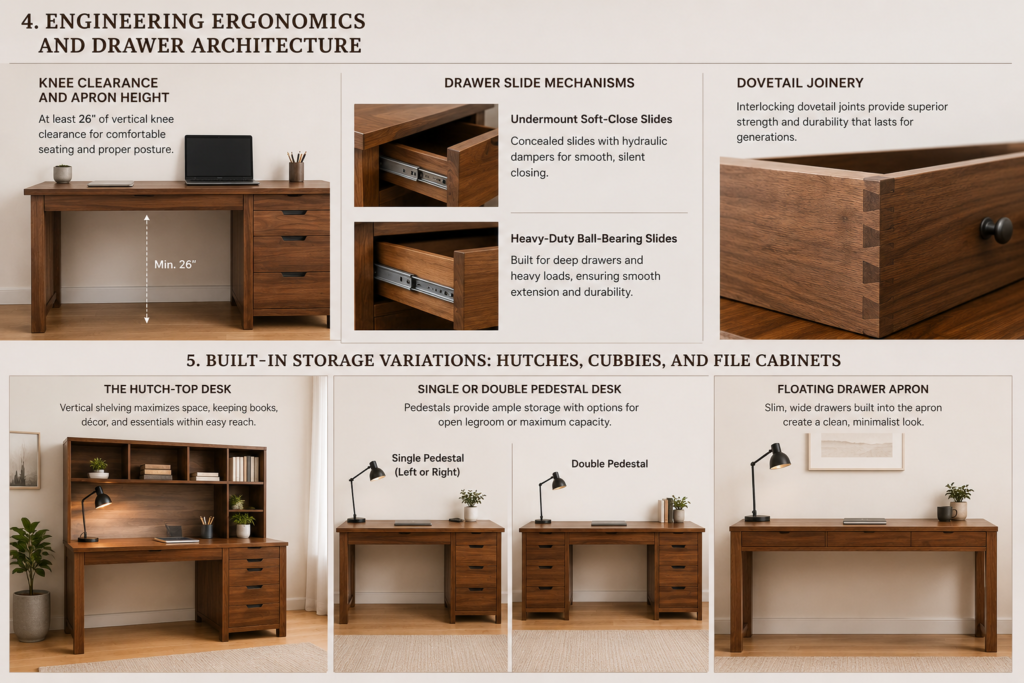
Knee Clearance and Apron Height
Standard ergonomic guidelines dictate that your desk should provide at least twenty-six inches of vertical knee clearance and ample horizontal width between pedestal cabinets. If a desk features a central drawer, ensure the bottom clearance accommodates your crossed legs or ergonomic chair armrests without forcing you to sit at an unnatural distance.
Drawer Slide Mechanisms
The tactile feedback of a high-end study desk is largely determined by its drawer hardware.
- Undermount Soft-Close Slides: The gold standard for modern furniture. These slides are concealed beneath the drawer box, allowing for clean visual lines, and feature hydraulic dampers that catch the drawer in its final inches, pulling it closed in silence.
- Heavy-Duty Ball-Bearing Slides: Essential for deep lateral file drawers or cabinets designed to hold heavy text books and electronics. They prevent wobbling and ensure smooth extension even when loaded to capacity.
Dovetail Joinery
Inspect the corners of the drawers. Machine-cut or hand-cut dovetail joints—where interlocking trapezoidal fingers lock adjacent boards together—indicate true heirloom construction. Unlike stapled or glued butt joints that snap under lateral stress, dovetail joints grow stronger under pressure.5. Built-in Storage Variations: Hutches, Cubbies, and File Cabinets
Not all storage configurations serve the same workflow. Depending on whether you are an academic researcher, a digital creator, or a financial analyst, your ideal desk configuration will vary.
The Hutch-Top Desk
Featuring vertical shelving units built directly onto the back edge of the desktop, hutch desks maximize vertical space. They are exceptional for keeping reference books, decorative plants, motivational frames, and stationary jars within arm’s reach without sacrificing precious desktop acreage.
The Single or Double Pedestal Desk
Inspired by traditional executive and partner desks, pedestal models feature standalone stacks of drawers on one or both sides beneath the worksurface.
- Single Pedestal (Left or Right): Leaves one side open for a spacious, airy feel while providing three to four drawers on the opposite side.
- Double Pedestal: Provides maximum storage capacity, dividing drawers between personal items on one side and deep file storage on the other.
Floating Drawer Aprons
For a lighter, less imposing visual footprint, many contemporary solid wood desks integrate a slim, wide drawer directly beneath the center bevel of the desktop. This low-profile drawer is perfect for housing laptops, tablets, sketchpads, and writing utensils while preserving the clean lines of mid-century modern or minimalist decor.
5. Sustainable Sourcing and Eco-Friendly Finishes
Investing in solid wood carries an ecological responsibility. Because you are purchasing furniture derived from living trees, ensuring that your investment aligns with sustainable forestry practices is paramount.
Certifications to Look For
- FSC (Forest Stewardship Council): Ensures that the timber is harvested from forests managed with strict environmental, social, and economic standards, protecting old-growth ecosystems and wildlife habitats.
- PEFC (Programme for the Endorsement of Forest Certification): Another rigorous international standard verifying sustainable wood supply chains.
- Reclaimed and Upcycled Timber: Utilizing salvaged structural beams from old barns, factories, or historical buildings provides peerless character, historic knots, and nail holes while leaving zero footprint on contemporary forests.
Natural Finishes vs. Polyurethanes
The finish on your solid wood study desk dictates how it reacts to spilled coffee, ink, and daily friction.
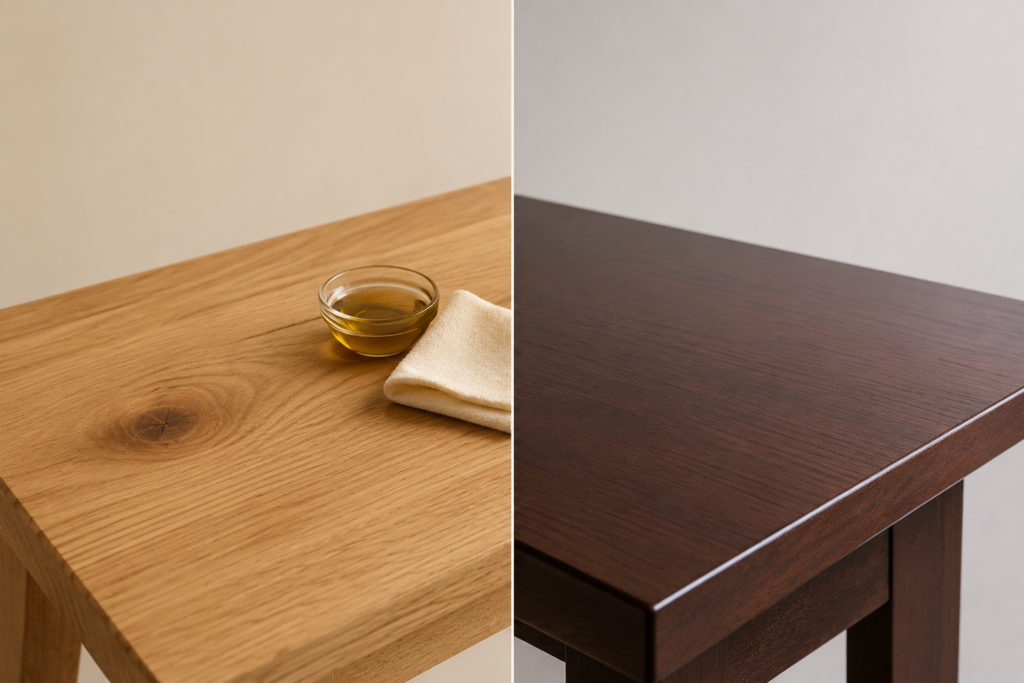
- Hard-Wax Oils (e.g., Osmo, Rubio Monocoat): These penetrate deep into the wood fibers rather than sitting as a plastic film on top. They maintain the tactile, organic warmth of raw wood, make spot-repairs effortless, and contain zero harmful chemical solvents.
- Conversion Varnishes and Lacquers: Offer maximum moisture and scratch resistance, making them ideal for heavy-duty student desks, though they can feel slightly colder and more synthetic to the touch.
6. Styling Your Solid Wood Workspace: Integrating Decor and Cable Management
A magnificent solid wood study desk deserves an interior styling strategy that elevates its natural beauty rather than obscuring it under clutter.
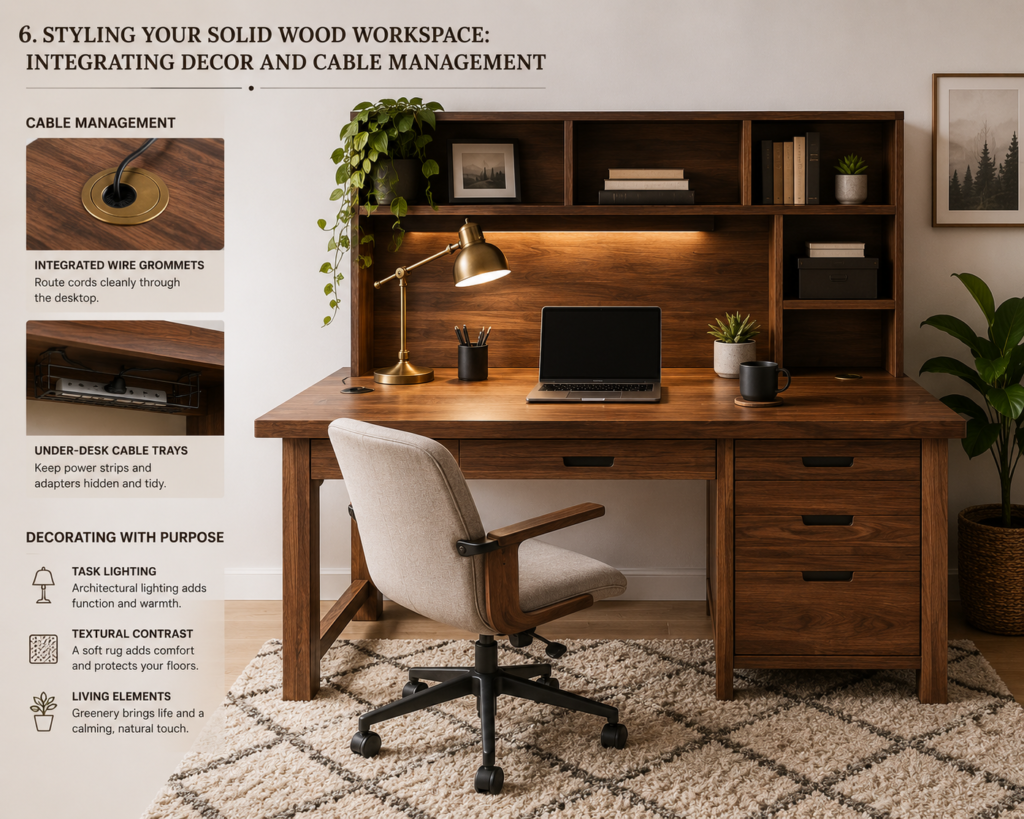
Cable Management in Timber Desks
One major challenge with modern electronics on a wooden desk is unsightly cord chaos. When shopping for your desk, look for models featuring:
- Integrated Wire Grommets: Pre-drilled circular ports outfitted with solid brass or wood inserts to route monitor and lamp power cords cleanly behind the desk.
- Under-Desk Cable Trays: Metal or wooden raceways mounted underneath the back edge to catch power strips and brick adapters, keeping cables entirely out of sight.
Decorating with Purpose
- Task Lighting: Pair your solid wood desk with an architectural brass or matte black task lamp. The warm metallic tones contrast exquisitely against the organic grain of walnut or oak.
- Textural Contrast: Introduce a high-pile wool area rug beneath the desk chair to soften the acoustics of the room and protect hardwood floors from caster wheels.
- Living Elements: Place a small, potted succulent or trailing pothos on a hutch shelf or corner. The vibrant green foliage pops against natural wood tones, infusing biophilic design into your daily routine.
7. Maintenance and Long-Term Care Guide
A solid wood study desk with drawers is an heirloom-grade possession. With proper maintenance, it will outlive everyone in your household, eventually passing down to children or grandchildren as an antique of exceptional pedigree.
Routine Cleaning
Dust your desk weekly with a soft, dry microfiber cloth. Avoid generic chemical glass cleaners or silicone-based furniture polishes; silicone builds up a gummy film over time that attracts dust and ruins natural wood finishes.
Conditioning and Hydration
Depending on your climate and indoor heating systems, solid wood can dry out and develop minor checking or splitting during winter months. Annually or bi-annually, apply a nourishing beeswax or specialized wood balm to replenish natural oils, maintain water resistance, and deepen the luster of the grain.
Managing Environmental Humidity
Keep your wooden desk away from direct heat sources such as active radiators, heating vents, or unshaded south-facing windows where extreme temperature fluctuations can cause the wood fibers to warp or expand unevenly. An indoor humidity level between forty and fifty percent is optimal for both human health and fine wooden furniture.

Conclusion
Purchasing a solid wood study desk with built-in storage and drawers is much more than a functional furniture transaction—it is a commitment to quality craftsmanship, cognitive focus, and timeless design. By eliminating workspace clutter, choosing sustainable hardwoods, and honoring the natural integrity of timber, you create an inspiring sanctuary that elevates your daily work and study rituals for decades to come.