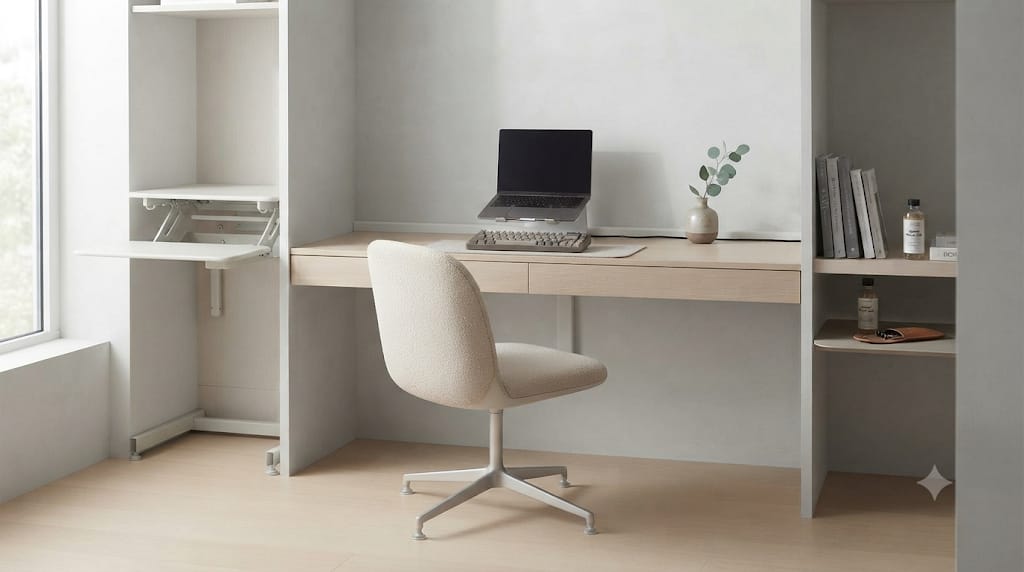
The modern home office is no longer defined by vast square footage, heavy mahogany executive desks, or dedicated spare bedrooms. As urban real estate shifts toward compact studio apartments, micro-condos, and shared multipurpose living spaces, our relationship with functional furniture has underwent a massive evolution. The modern remote worker, freelancer, and student face a shared daily challenge: how to build an ultra-productive, ergonomic study environment without letting workspace clutter overtake precious living area.
The ultimate solution lies in smart, vertical furniture engineering: the minimalist wall mounted folding study desk for small spaces.
Often referred to as a drop-leaf floating table or a wall-mounted Murphy desk, this architectural fixture provides a dedicated, rigid work surface during focus hours—and completely disappears when the workday ends. Beyond mere space-saving mechanics, a wall-mounted folding desk acts as a stylistic anchor for your room’s decor, bridging the gap between high-end interior aesthetics and zero-footprint functional utility.
1. Architectural & Structural Dynamics of Wall-Mounted Desks
Designing a high-performance workspace in a compact footprint requires understanding how load-bearing wall hardware operates. Unlike traditional four-legged desks that transfer gravitational forces straight down into the floorboards, a floating wall desk relies entirely on rotational force dynamics, shear stress resistance, and tensile anchor strength.
When you lean your arms onto a fold-down work surface, the top wall fasteners experience intense outward tension, while the bottom frame presses directly into the drywall with compression force.

1.1 Core Hardware Components Driving Stability
- Heavy-Duty Collapsible Locking Hinges: Premium folding desks utilize spring-loaded steel or brass brackets capable of handling dynamic loads between 100 to 300 pounds. These mechanisms automatically lock into place when raised 90 degrees and feature quick-release levers underneath for a smooth, single-handed drop.
- Gas-Strut and Hydraulic Dampening Systems: Premium modern iterations incorporate micro-hydraulic pistons. Rather than allowing the desk board to drop heavy against the wall when unlatched, hydraulic struts provide a controlled, whisper-quiet soft-close motion.
- Solid-Core Substrates vs. Lightweight Composites: While hollow-core particle boards reduce initial wall load, high-grade birch plywood, solid oak, walnut, or medium-density fiberboard (MDF) offer superior screw-retention strength. Higher density ensures the mounting brackets never pull out of the wood core under daily typing vibrations.
2.Workspace Layout Configurations for Micro-Living
Integrating a fold-down work surface into a small room requires strategic placement. A poorly placed wall desk can obstruct interior foot traffic or cast harsh shadows across your workspace.
2.1 Strategic Placement Strategies
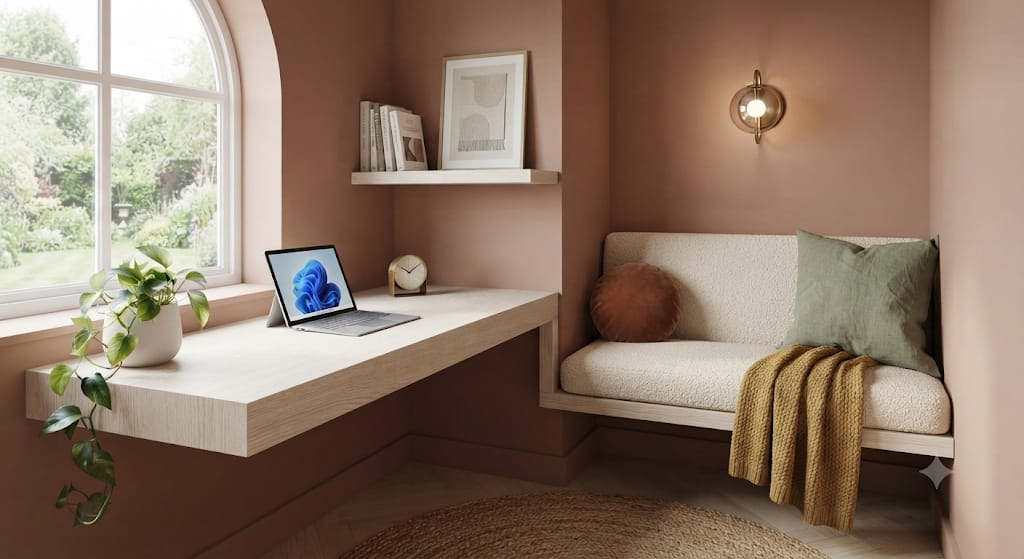
- Unused Structural Alcoves: If your room features a recessed architectural nook or an unused structural column cutout, mounting a custom-width drop-leaf desk inside transforms dead space into a built-in office pod.
- The Bedroom Visual Zone: Placing a work desk in a small bedroom often leads to psychological burnout, as your brain connects your bed with work stress. A fold-down desk eliminates this issue—closing the desk at night visually signals the end of your workday.
- Multipurpose Kitchen & Dining Walls: In studio apartments, a long wall-mounted drop-leaf surface can double as a laptop study station by day and a sleek two-person dining bar by night.

3. Materials & Aesthetic Profiles in Minimalist Decor
3.1 Popular Style Profiles
A minimalist study desk should never look like an industrial utility shelf. Because it sits permanently at eye level, its texture, grain, and hardware finish directly influence the room’s overall aesthetic.
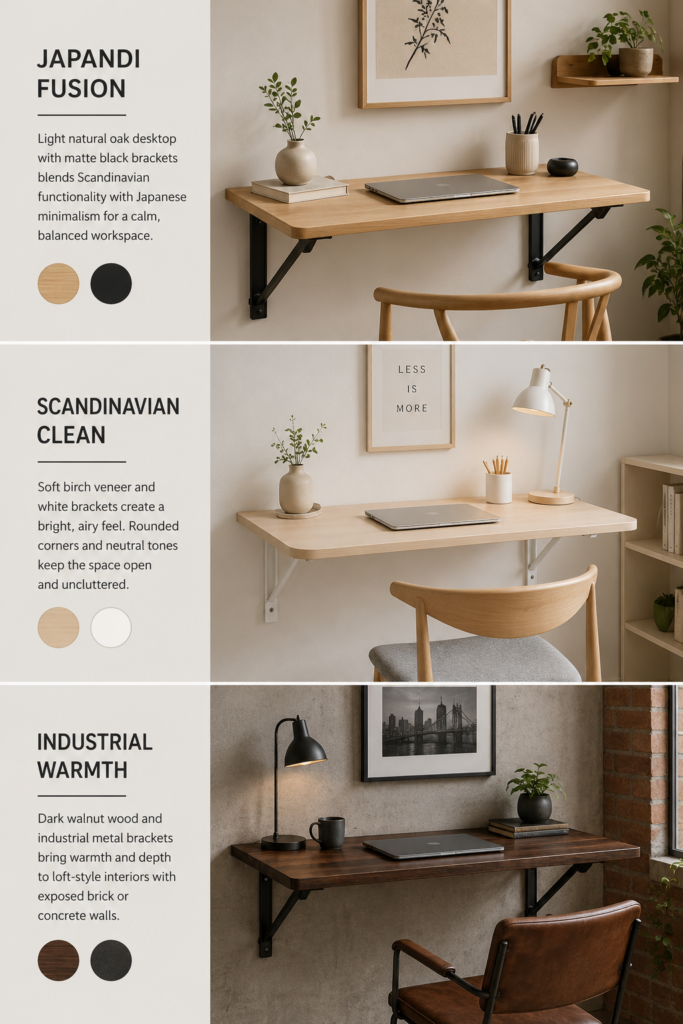
Japandi Fusion
Japandi design merges Scandinavian functionality with Japanese rustic minimalism. Look for wall desks crafted from light natural oak, white ash, or sustainable bamboo paired with matte black bracket hardware. Keep the desktop profile ultra-thin (around 0.75 inches) to maintain a light, airy feel.
Scandinavian Clean
Defined by monochromatic palettes, soft birch veneers, and clean white mounting frames. Scandinavian fold-down desks often feature subtle curved corners to soften hard structural lines, making small rooms feel larger and more open.
Industrial Warmth
For loft-style apartments exposed to brick or concrete walls, rich dark walnut boards paired with oil-rubbed bronze or raw iron folding arms add grounding visual texture without overwhelming the room.
4. Installation Mechanics: Securing Your Desk Safely
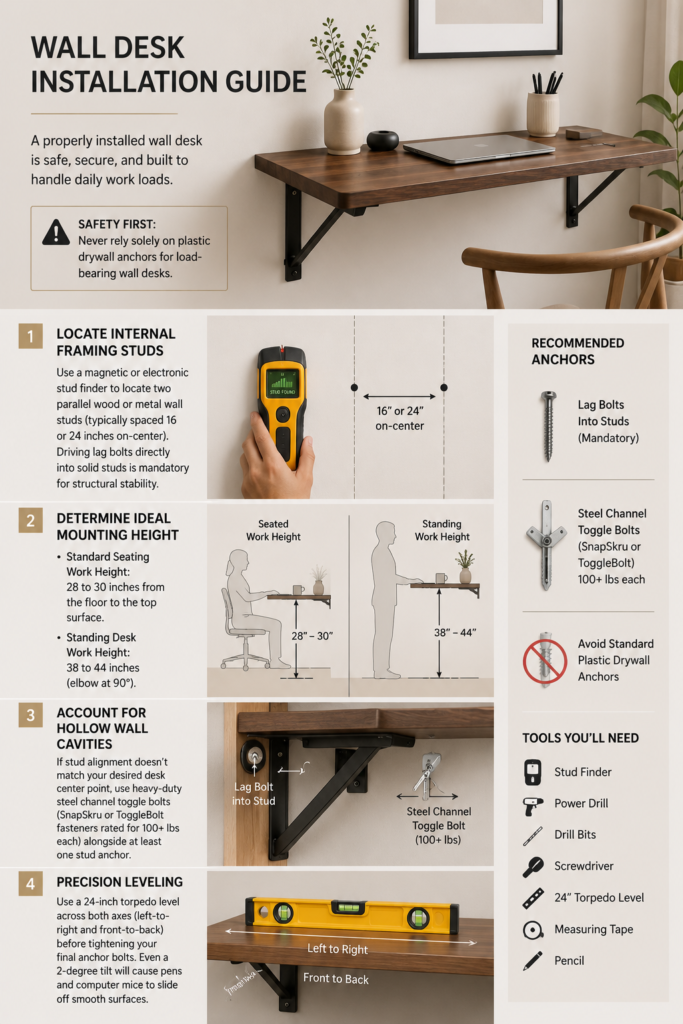
Hanging a load-bearing wall desk requires proper structural anchor techniques. Never rely solely on standard plastic drywall anchors for a desk meant to support laptops, heavy books, and human arm weight.
4.1 Installation Steps
- Locate Internal Framing Studs: Use a magnetic or electronic stud finder to locate two parallel wood or metal wall studs (typically spaced 16 or 24 inches on-center). Driving primary lag bolts directly into solid wood studs is mandatory for structural stability.
- Determine Ideal Mounting Height:
- Standard Seating Work Height: 28 to 30 inches from the floor to the top surface.
- Standing Desk Work Height: 38 to 44 inches (aligned with your elbow angle at 90 degrees).
- Account for Hollow Wall Cavities: If stud alignment doesn’t match your desired desk center point, use heavy-duty steel channel toggle bolts (such as SnapSkru or ToggleBolt fasteners rated for 100+ lbs each) alongside at least one stud anchor.
- Precision Leveling: Use a 24-inch torpedo level across both axes (left-to-right and front-to-back) before tightening your final anchor bolts. Even a 2-degree tilt will cause pens and computer mice to slide off smooth minimalist surfaces.
5. Ergonomics in Compact Workspaces
Small spaces often force poor posture habits, like slouching on a sofa with a laptop or working at a kitchen counter that sits too high. A wall-mounted folding study desk allows you to set up custom ergonomic heights tailored precisely to your torso and arm length.
5.1 Ergonomic Best Practices
- The 90-Degree Rule: Mount your desktop so that when your hands rest on the keyboard, your forearms sit parallel to the floor with your elbows bent at a 90 to 100-degree angle. This prevents shoulder shrugging and wrist strain.
- Concealed Monitor Arms: Pair your drop-leaf desk with a slim wall-mounted gas-spring monitor arm directly above it. This lifts your screen to eye level without cluttering your compact desktop surface.
- Low-Profile Ergonomic Seating: Pair your desk with a minimalist task chair that slides completely underneath neighboring furniture, or opt for a stylish stackable wooden stool that tucks away when the desk is folded down.

6. Cable Management & Power Integration
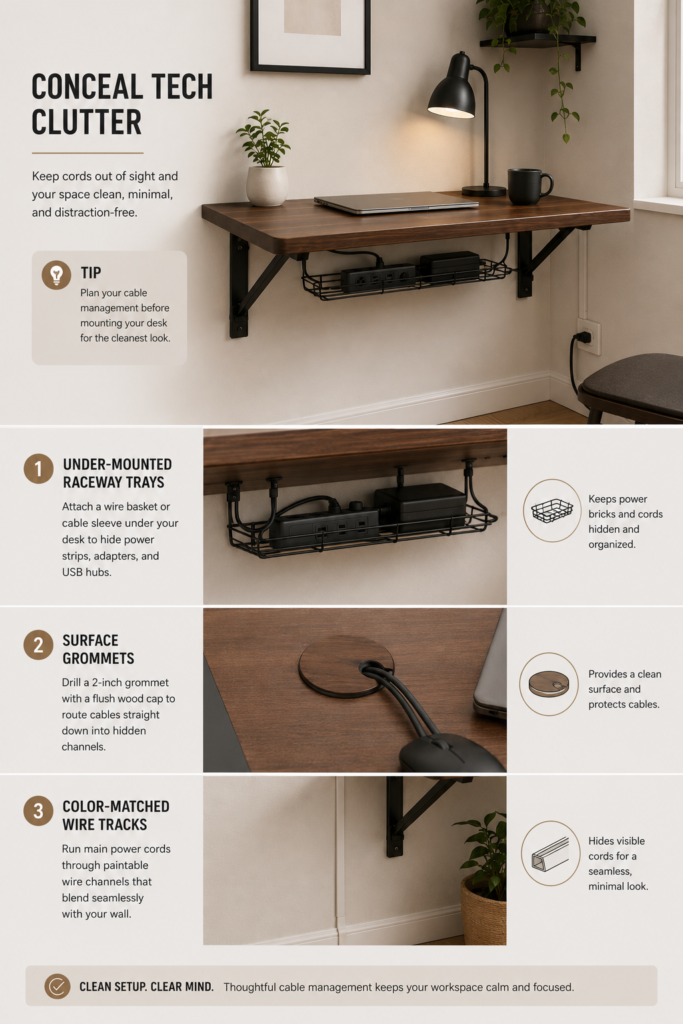
Nothing ruins a clean, minimalist aesthetic faster than a tangled mess of black power cords dangling from a floating desk to a baseboard outlet.
6.1 Concealing Tech Clutter
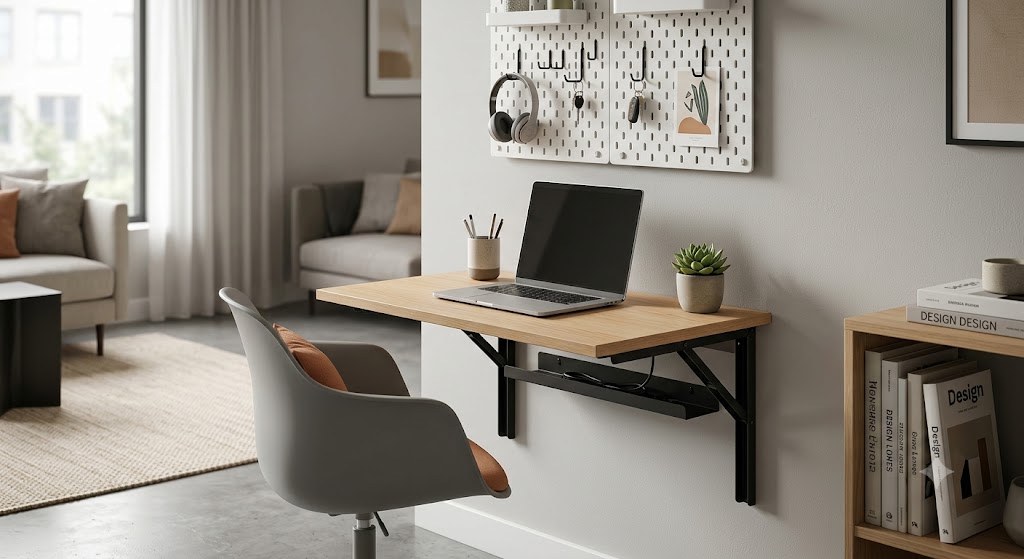
- Under-Mounted Raceway Trays: Attach a low-profile wire basket or fabric cable sleeve directly to the underside of the folding board. This houses power strips, laptop charging bricks, and USB hubs safely beneath the surface.
- Surface Grommets: Drill a clean 2-inch desk grommet equipped with a flush-fit wood cap. This allows keyboard, mouse, and power wires to pass straight down into hidden cable channels.
- Color-Matched Wall Wire Tracks: Run dangling main power cords through paintable, low-profile PVC wire channels. Painting the channel the exact color of your wall makes the cable path fade into the background.
7. Styling & Decorating a Folding Wall Desk Zone
A minimalist workspace should balance functional utility with intentional decor. When the desk folds up, the surrounding wall area remains visible, making smart wall styling essential.
7.1 Elevating the Visual Setup
- Acoustic Felt Wall Panels: Mounting noise-dampening felt panels directly behind the desk dampens echo during video calls and adds warm visual texture to compact rooms.
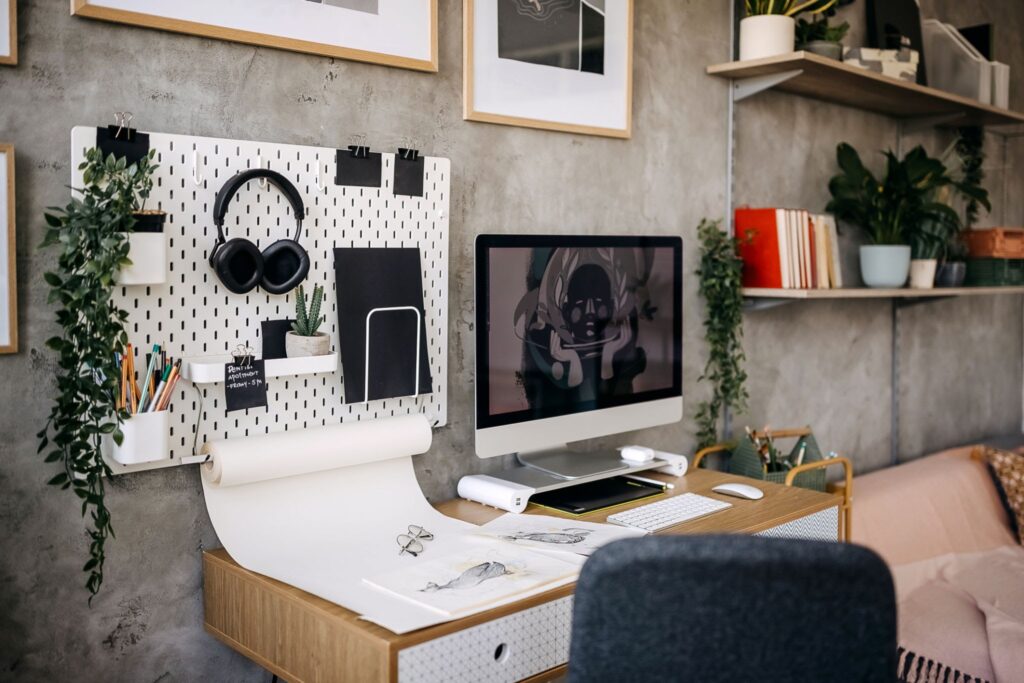
- Integrated Pegboards: Install a sleek, color-matched metal pegboard above the desk fold zone. Use minimal peg accessories to hold small stationery, headphones, and a tiny potted succulent.
- Warm Ambient Lighting: Avoid bulky table lamps that hog desktop real estate. Instead, mount an ultra-thin LED light bar underneath an overhead shelf or stick a magnetic rechargeable LED bar directly above your working field.
8. Maintenance & Long-Term Durability
To keep your wall-mounted folding desk operating smoothly for years, follow a consistent maintenance routine:
- Quarterly Hardware Checks: Tighten lag bolts and bracket screws every three to six months. Daily micro-vibrations from typing and folding can slowly loosen wall anchors over time.
- Hinge Lubrication: Apply a single drop of clear silicone spray lubricant to internal hinge pivot points once a year to keep the folding action quiet and smooth.
- Surface Protection: Treat natural wood tops with hardwax oils (like Rubio Monocoat or Osmo) to protect against coffee rings, ink marks, and laptop heat discoloration without creating a plasticky shine.