When walking into a meticulously designed living room, the immediate sensory experience is rarely dictated by the primary furniture layout alone. Instead, it is governed by mood, depth, and shadow. For decades, interior architecture relied heavily on ceiling-mounted fixtures and recessed cans to brighten spaces, frequently resulting in flat, uninspired environments. Today, high-end residential design has experienced a profound sensory correction. The focus has shifted downward, turning toward intimate, sculptural lighting layers that act as room jewelry.
Among these sophisticated elements, the luxury designer ceramic table lamp has emerged as the definitive anchor for contemporary living spaces. Far more than a mere utility used to chase away evening darkness, a masterclass ceramic lamp bridges the gap between functional engineering and high art. It commands attention when unlit as a tactile sculpture, and completely reshapes the atmospheric architecture of a room when illuminated.
1. The Anatomy of a Masterpiece: Why Ceramic Endures in High-End Design
In an era dominated by sleek metals, polymers, and ultra-minimalist tech products, ceramic offers an organic, grounding contrast. Clay is one of mankind’s oldest mediums, yet in the hands of contemporary master ceramicists and luxury design houses, it represents the cutting edge of decorative arts.
Tactile Weight and Visual Gravity

A true designer ceramic table lamp possesses physical and visual weight. Unlike lightweight mass-market alternatives that easily tip or feel hollow, a luxury ceramic base is substantial. This gravity anchors a living room console, side table, or mantelpiece, establishing a sense of permanence. When placed upon rich wood grains, fluted marble credenzas, or travertine media units, the dense, earthy composition of fired clay introduces a vital textural counterweight to hard architectural lines.
The Alchemy of Glazes
The true differentiator of high-end ceramic lighting lies in the chemistry and application of its glaze. Mass-produced lighting relies on flat, uniform chemical coatings sprayed on by machines. Designer ceramics, conversely, often feature reactive glazes, crazing, crystalline formations, or hand-poured techniques that guarantee no two pieces are identical.
- High-Gloss Liquid Finishes: Deep obsidian blacks or liquid creams that reflect ambient interior light, casting subtle mirror-like ripples across the room.
- Matte Bisque and Terra Cotta: Porous, unglazed, or softly sanded surfaces that absorb light, emphasizing pure organic form and shadow.
- Craquelure and Crackle Glazes: Intricate networks of micro-fissures that catch the eye up close, adding historic depth and a curated, collectible quality to the space.
2. Sculptural Silhouettes: Shaping the Living Room Mood
Modern luxury living spaces reject the predictable uniformity of matching lamp sets. Instead, designers approach lighting layout with an eye toward asymmetrical balance, organic biophilic forms, and architectural geometry.
Organic and Biophilic Curves
Drawing inspiration from nature, contemporary ceramic lamps frequently mimic organic structures—seed pods, rising mushroom caps, eroded river stones, and botanical stems. These soft, curvaceous outlines serve as a visual exhale within modern living rooms dominated by linear sectionals, sharp television screens, and square coffee tables.
Fluted and Pleated Textures
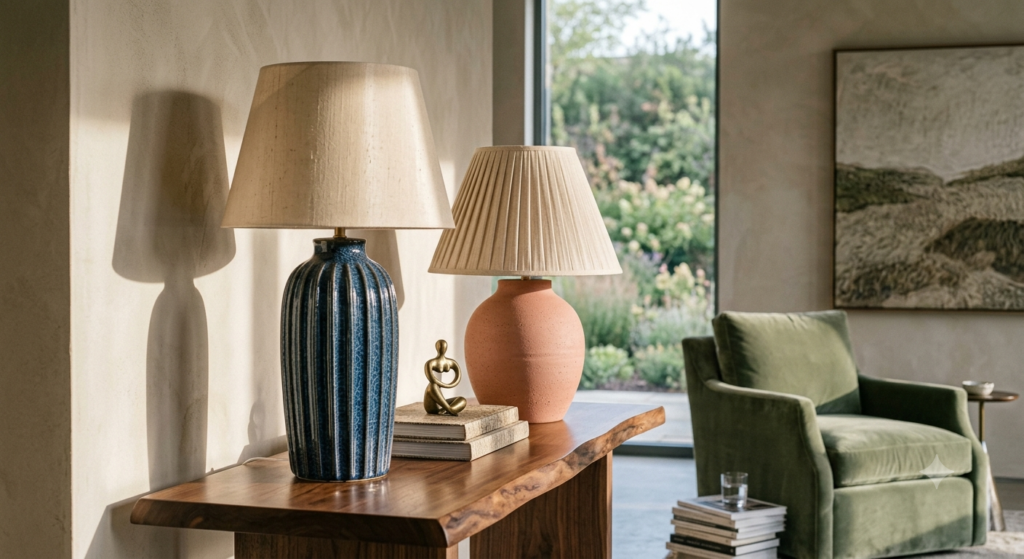
One of the most refined movements in high-end ceramic design is the integration of architectural fluting and hand-molded pleats directly into the clay body. These vertical or diagonal channels capture grazing daylight throughout the afternoon, producing dynamic patterns of shadow and light even before the switch is flipped. When illuminated from within, the light cascades across the ridges, emphasizing the artisan’s hand and softening the hard edges of adjacent metal and glass elements.
3. The Science of Softness: Crafting Atmosphere Through Light
Luxury is quiet, restorative, and deeply personal. Clinical, high-kelvin overhead lighting has been firmly phased out of high-end residential specifications in favor of layered, warm-dim illumination.
Color Temperature and the Human Experience
A designer ceramic table lamp is engineered to host warm, enveloping light sources—typically ranging between 2700K and 3000K. This specific temperature range flatters skin tones, enriches natural wood finishes, and brings out the underlying pigments of expensive textiles and wall coverings.
Shade Synergy: Linen, Silk, and Parchment
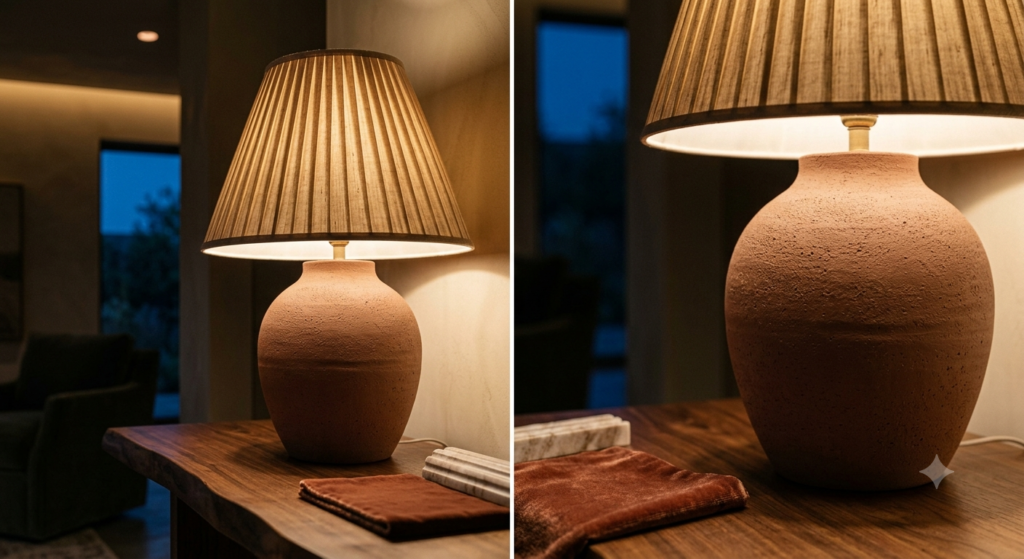
The ceramic base provides the sculpture, but the shade dictates the diffusion. Luxury lamps are routinely crowned with shades crafted from heavy Belgian linen, raw silk dupioni, or hand-rolled parchment.
- Oversized Drum Shades: By pairing an unexpectedly massive drum shade with a modest, heavy ceramic base, designers create a dramatic silhouette that scales up the visual weight of a seating area.
- Tapered Empire Shades: Offering a nod to classic tailoring, these shades direct the majority of light straight down while emitting a subtle, warm halo through the top and bottom rings.
4. Strategic Placement: Where to Position Your Designer Lamp in the Living Room
Integrating a luxury ceramic table lamp requires an understanding of scale, focal points, and negative space. These pieces should never be treated as afterthoughts tucked into forgotten corners.
1. The Power Pair on a Long Credenza
Placing an identical pair of large-scale ceramic lamps on either end of a lengthy wooden or lacquered credenza behind a sofa creates instant architectural symmetry. This framing technique draws the eye across the room, balancing out large windows or heavy artworks hung above.
2. The Asymmetrical Reading Nook Anchor
In an open-concept living area, a single, highly sculptural ceramic lamp positioned on a corner side table next to a velvet accent chair establishes a distinct micro-environment. Paired with a low-level lounge chair, the lamp provides a pool of localized light that encourages reading, conversation, and relaxation.

3. Hearth and Mantel Integration
While traditional homes relied strictly on fireplace candelabras, modern luxury interiors often utilize a low-profile, artisanal ceramic lamp on a deep mantelpiece or a side stone hearth. This introduces an unexpected layer of soft, low-level illumination that competes with neither the television nor the active fire, creating a deeply layered evening vignette.
5. Maintenance, Longevity, and Sustainability as True Luxury
True luxury in the modern design landscape is inextricably linked to sustainability and longevity. Fast-decor trends—characterized by fragile plastics and disposable wiring—are being replaced by heirloom-quality investments.
- Timeless Materials: Ceramic does not degrade, yellow, or warp over time. A well-fired, high-temperature ceramic base from a premier studio will look identical in thirty years, acquiring only a richer patina of history.
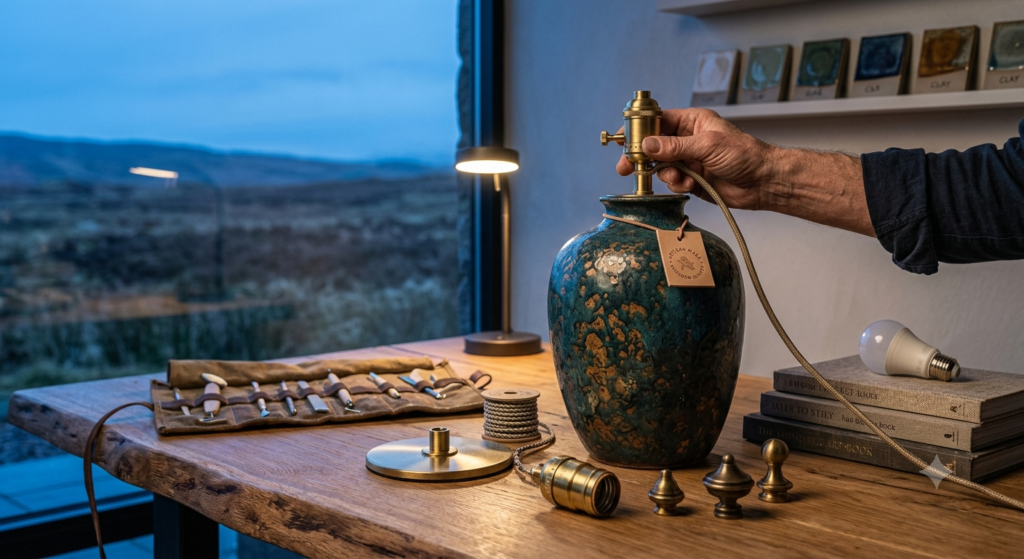
- Serviceable Components: High-end lamps prioritize accessible, upgradable hardware. Solid brass sockets, cloth-wrapped cords, heavy-duty weighted bases, and replaceable LED-compatible inner workings ensure that the fixture can be easily repaired rather than discarded.
- Conscious Craftsmanship: Many luxury ceramic lamp bases are hand-thrown by independent ceramicists or small-batch European and domestic studios. Purchasing these items supports traditional craftsmanship, ensuring that ancient glazing and molding techniques survive in an automated world.
Conclusion: Elevating Your Living Space Into a Sanctuary
The transition of the living room from a formal hosting parlor into an everyday personal sanctuary has elevated the status of home lighting. A luxury designer ceramic table lamp is far more than a decorative accessory; it is a transformative investment in atmosphere, texture, and artistic expression. By carefully selecting a piece defined by organic contours, rich reactive glazing, and thoughtful scale, you introduce a timeless anchor into your home. When evening falls and the switch is turned, the harsh exterior world recedes, leaving behind an interior defined by the warm, sculptural, and undeniably sophisticated glow of artisan ceramic design.