Introduction: The Renaissance of the Modern Workspace
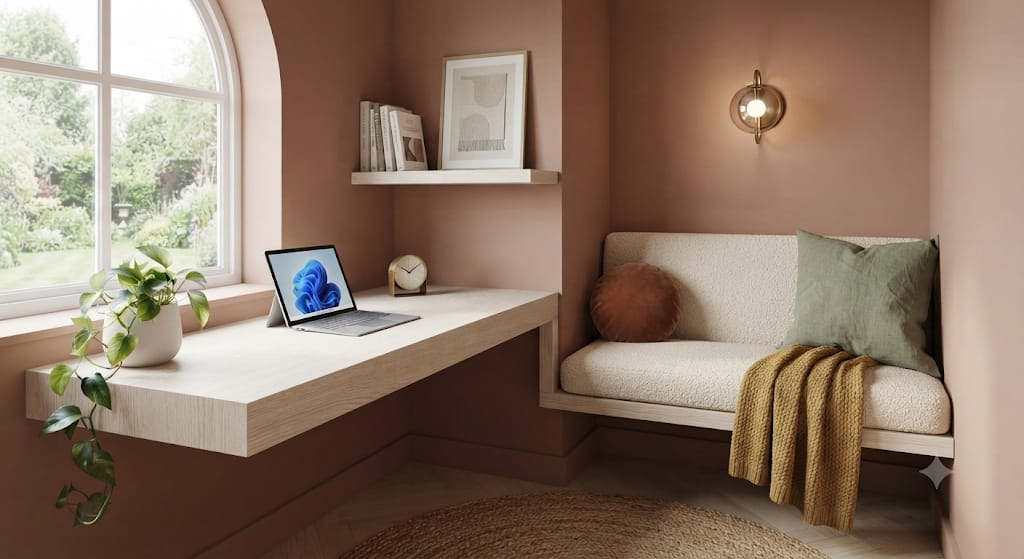
The modern workspace has undergone a seismic shift. Gone are the days when a desk was merely a functional slab of wood or metal meant to hold a clunky desktop computer and a mountain of chaotic paperwork. Today, our desks are extensions of our personal identities, wellness hubs, and creative sanctuaries. Whether you are navigating a remote career, studying late into the night, or running a digital empire from a cozy corner of your home, your physical environment dictates your mental clarity.
Enter the quiet revolution of desktop organization. Among the rising tide of plastic caddies, neon acrylic trays, and sterile metal grids, one material continues to reign supreme for its timeless warmth, texture, and grounding energy: wood.
Specifically, aesthetic wooden storage boxes for desks have emerged as the holy grail of interior stylists, productivity experts, and minimalists alike. These aren’t just utility containers meant to shove clutter out of sight; they are meticulously crafted design objects that bridge the gap between organic beauty and ruthless efficiency.
In this comprehensive guide, we will explore why aesthetic wooden storage boxes are transforming modern workspaces, examine the psychological impact of wood elements in interior design, break down the various wood types and design styles available, and provide a masterclass on how to curate, maintain, and style them for maximum productivity and high eCPM visual appeal.
The Psychology of Workspace Aesthetics and Wood Elements
To understand why wooden storage boxes command such high regard in interior design, we must first look at biophilic design—the innate human tendency to seek connections with nature and other forms of life.
Biophilic Design at Your Fingertips
Spend eight hours staring at a cold, monochromatic plastic desk setup, and you will likely experience cognitive fatigue and subtle stress. Conversely, incorporating organic elements like wood grain, stone, or living plants into your immediate field of vision has been scientifically proven to:
- Lower cortisol (stress) levels.
- Enhance cognitive function and sustained attention.
- Boost overall mood and creative output.
A wooden storage box on your desk introduces natural variation, tactile warmth, and a subtle organic scent that grounds you during high-pressure work tasks. It acts as an anchor for your senses, turning a sterile office environment into a living, breathing studio.
The Antidote to Digital Fatigue

We live hyper-digital lives. Our eyes are constantly locked onto glass screens, pixelated spreadsheets, and glowing notifications. When you reach for a paperclip, a charging cord, or a notepad inside a hand-rubbed walnut or oak storage box, you experience a grounding tactile contrast. The smooth, satin finish of treated timber provides a much-needed sensory break from the digital realm.
Anatomy of an Aesthetic Desk Box: Form Meets Function
What separates a generic wooden crate from a truly aesthetic desk storage box? It comes down to a delicate intersection of material integrity, hardware subtlety, proportion, and craftsmanship.
1. Joinery and Construction
High-end aesthetic storage boxes avoid cheap staples or exposed ugly nails. Look for pieces featuring:
- Dovetail Joints: Interlocking fingers that not only provide indestructible strength but also offer a stunning geometric visual detail along the corners.
- Finger Joints (Box Joints): Clean, alternating blocks of wood that highlight precision craftsmanship.
- Mitered Edges: Where the grain wraps seamlessly around the corners, creating a monolithic, ultra-modern look.
2. Finishes That Speak Volumes

The finish of a wooden box determines how it interacts with light and touch:
- Matte Oils and Waxes (Danish Oil, Beeswax): These penetrate the wood pores rather than sitting on top as a plastic film. They preserve the raw, velvety feel of the timber and age gracefully over time.
- Lacquers and Polished Polys: Best reserved for ultra-glossy, mid-century modern or executive desk setups that require a reflective, high-status sheen.
3. Clever Internal Architecture
An aesthetic exterior is useless if the inside is a chaotic void. Premium wooden boxes incorporate:
- Removable Trays: Perfect for separating tiny items like SIM cards, rings, or specialized nibs from larger notebooks.
- Custom Slotting: Laser-cut dividers that can be repositioned to fit pens, sticky notes, or USB hubs.
- Hidden Cord Pass-Throughs: Modern wooden charging boxes feature discreet rear notches allowing cables to snake out cleanly, transforming a messy power strip hub into a minimalist charging station.
Material Guide: Choosing Your Wood Species
Different woods carry entirely different aesthetic vocabularies. Selecting the right wood type ensures your storage box harmonizes with your desk surface, chair, and surrounding room decor.
Trending Styles of Wooden Desk Storage Boxes
Interior design trends continually evolve, yet wood remains a constant canvas. Here are the defining aesthetics currently dominating workspace styling:
1. The Japandi Minimalist Box
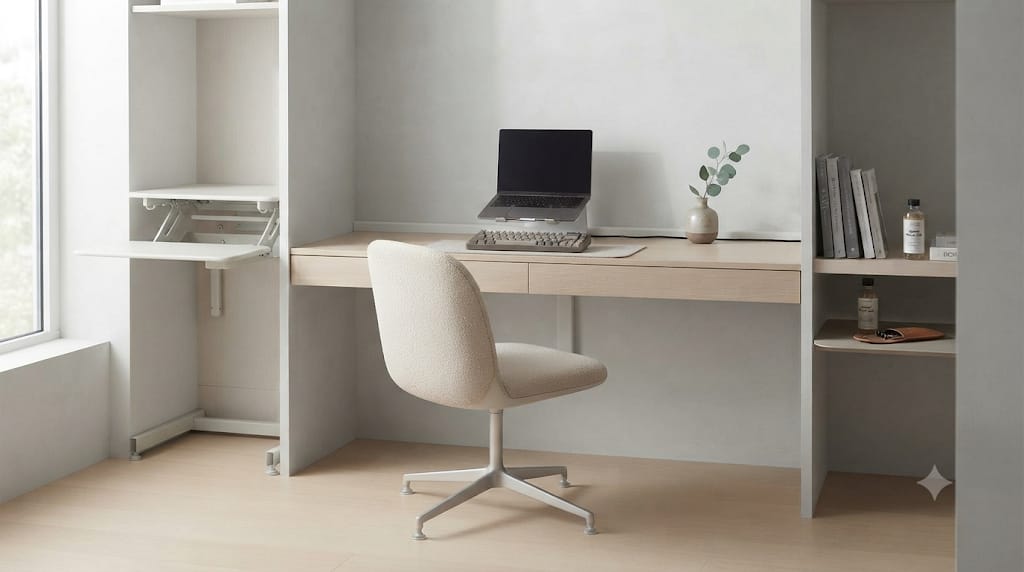
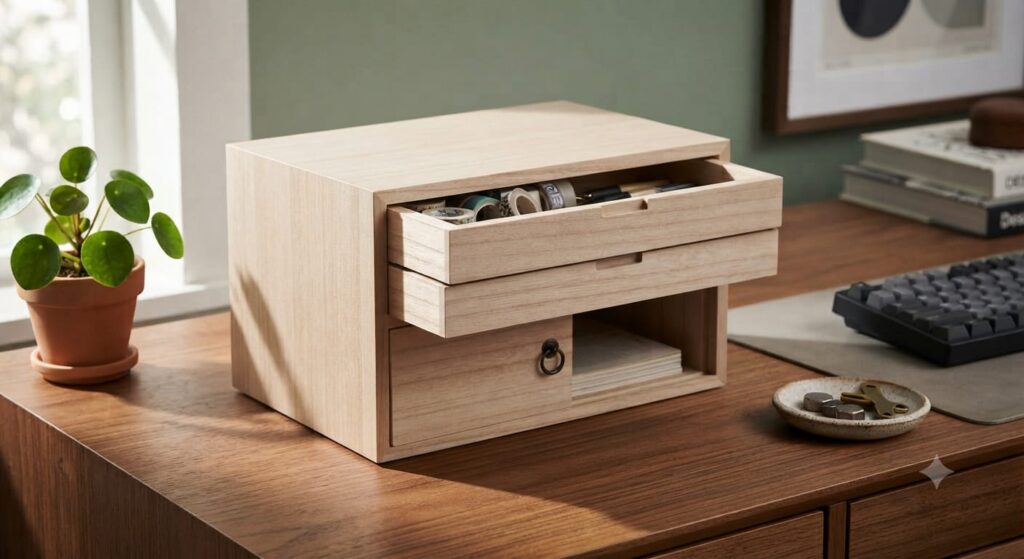
Merging Japanese functional minimalism with Scandinavian coziness (Japandi), these boxes emphasize clean lines, light oak or ash timbers, and complete absence of clutter. They often feature sliding lids or seamless push-to-open mechanisms. There are no brass handles or loud pulls—just pure, unadulterated geometry.
2. The Vintage Apothecary & Zakka Style
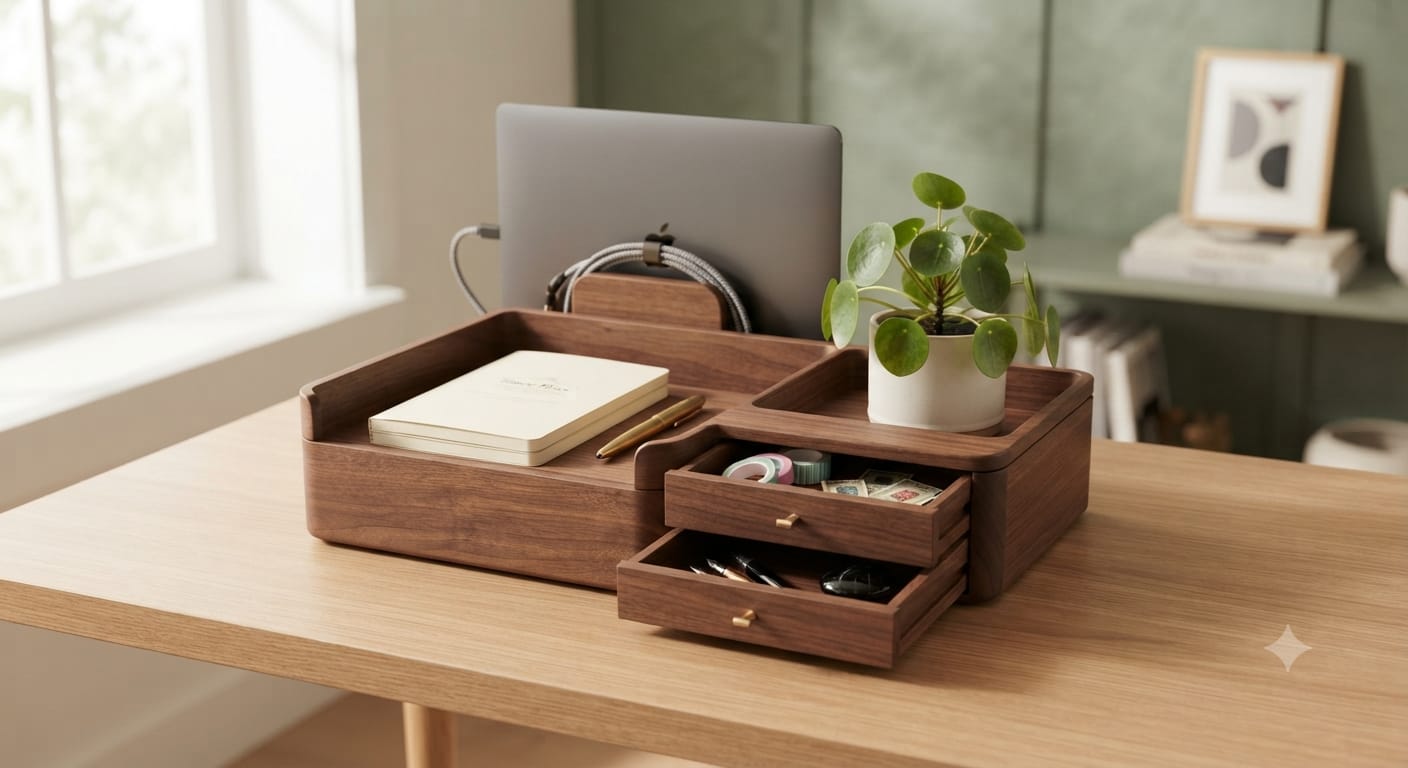
Drawing inspiration from traditional apothecary cabinets and Japanese Zakka design (the art of seeing the beauty in ordinary, small everyday items), these multi-drawer mini wooden chests feature tiny brass card holders, label pulls, and partitioned cubbies. They are ideal for storing stamps, fountain pen inks, paper clips, and aesthetic stationery.
3. The Brutalist / Monolithic Block
For those who prefer a bold architectural statement, monolithic wooden boxes carved out of a single heavy block of timber (often stained dark walnut or charcoal ash) offer a dramatic, sculptural presence. They look less like office supplies and more like modern art pieces resting beside your laptop.
4. The Rustic Farmhouse & Reclaimed Crate

Characterized by distressed patinas, visible saw marks, and rustic iron brackets, these boxes bring warmth and history to a workspace. Perfect for pairing with exposed brick walls, leather desk mats, and vintage task lamps.
Organizing Your Desk with Wooden Boxes: A Room-by-Room Strategy
An aesthetic box is only as good as its contents. To maximize both visual appeal and daily productivity, deploy a strategic zoning method across your desktop surface.
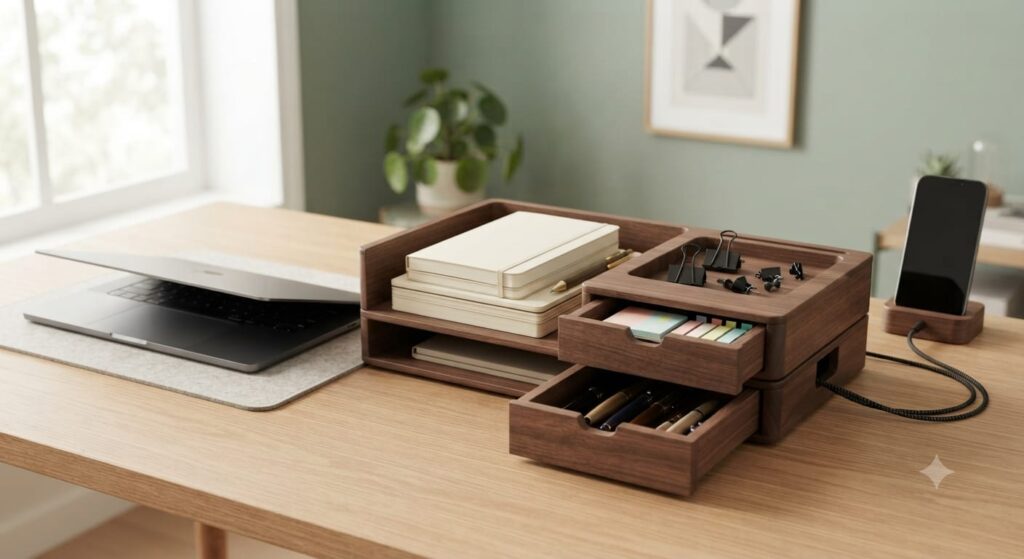
Zone 1: The Command Center (Immediate Reach)
- What to store: Daily pens, mechanical pencils, your current journal, and lip balm.
- The container: A low-profile compartmentalized wooden tray or a two-tier sliding box. Keeping this close to your dominant hand minimizes micro-movements and keeps high-frequency items from scattering.
Zone 2: The Digital Maintenance Hub (Rear Desk Space)
- What to store: USB flash drives, card readers, extra charging bricks, and tangled charging cords.
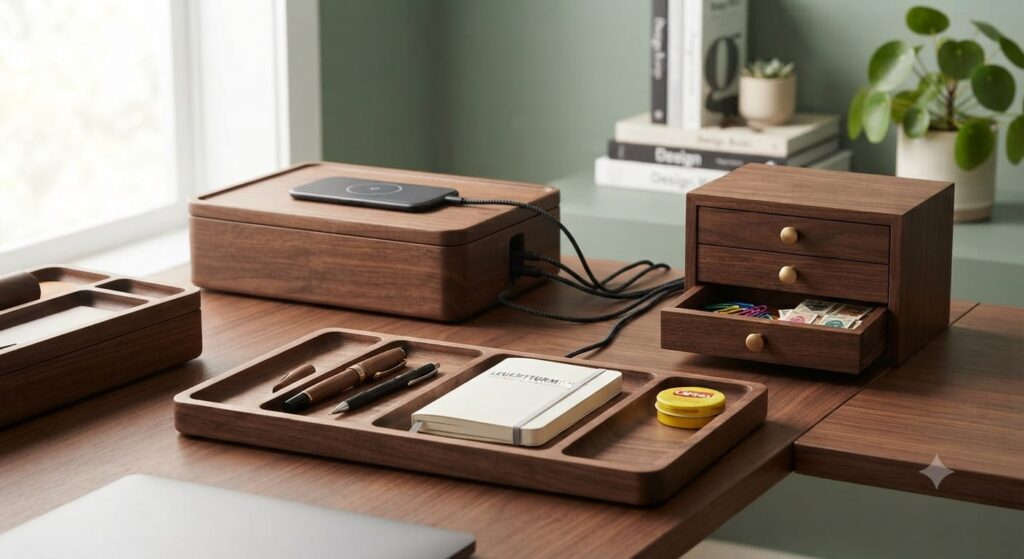
- The container: A deep, lidded wooden storage box with a custom rear cable slot. This keeps unsightly wires out of your eye line while maintaining easy access to power.
Zone 3: The Sanctuary Drawer (Out of Sight, Out of Mind)
- What to store: Confidential notes, spare keys, medicine, stamps, and miscellaneous knick-knacks.
- The container: A mini 3-drawer wooden apothecary chest. The physical act of sliding a wooden drawer shut provides a satisfying psychological boundary between active tasks and stored clutter.
DIY Customization: Creating a Bespoke Wooden Box
If mass-produced options do not capture your exact vision, customizing a raw, unfinished wooden box is an immensely satisfying weekend project that yields high-end results for minimal investment.
Step-by-Step Upcycling Guide:
- Source a Raw Wooden Box: Purchase an unfinished pine, birch, or paulownia craft box from a local hobby store or online marketplace. Ensure the joints are structurally sound.
- Sand to Perfection: Begin with 120-grit sandpaper to remove any manufacturing flaws, progressing smoothly to 220-grit and finally 320-grit for a glass-like texture.
- Apply Stain or Wood Dye: Water-based wood stains allow you to control depth. For a high-end walnut look on cheaper pine, apply a pre-stain wood conditioner first to prevent blotchiness, followed by a dark walnut gel stain.
- Line the Interior: Cut pieces of adhesive velvet, felt, or genuine cork to fit the bottom of the box compartments. This protects delicate items (like watches, glasses, or metal pens) from scratching and adds a luxurious tactile element when opened.
- Upgrade the Hardware: Swap out cheap factory hinges or knobs for solid brass, matte black, or brushed nickel hardware to instantly elevate the perceived value of the piece.
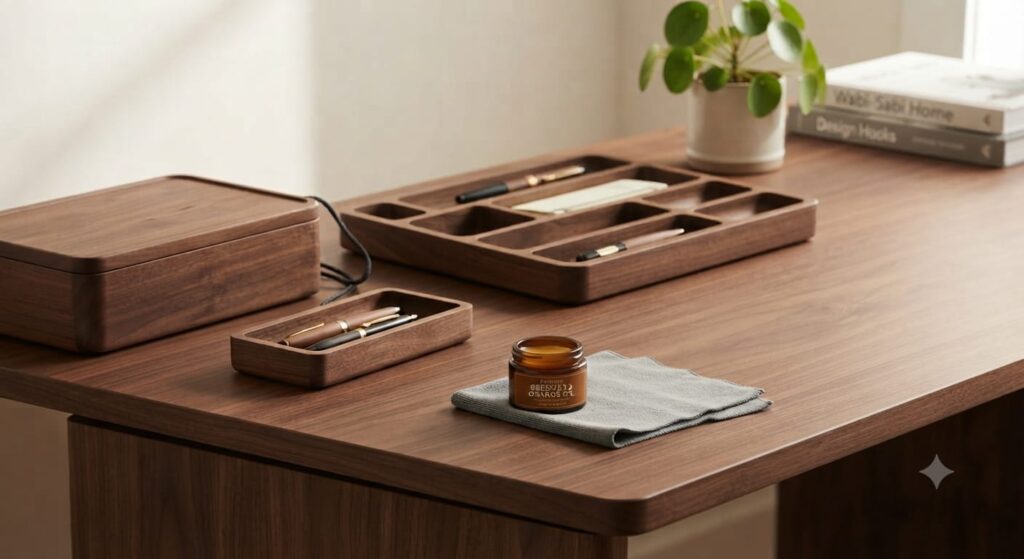
- Seal the Deal: Finish with two coats of natural carnauba wax or furniture salve, buffing with a lint-free cloth once dry.
Maintenance and Care for Fine Desk Woods
Wood is a hygroscopic material—it breathes, expanding and contracting with changes in your room’s humidity and temperature. To ensure your aesthetic desk storage boxes look pristine for decades, follow these golden rules of wood care:
- Avoid Direct Sunlight: Placing a rich walnut box in direct, blistering afternoon sunlight will cause UV bleaching and uneven fading. Rotate your desktop accessories periodically.
- Moisture Control: Never use soaking wet cloths or harsh chemical glass cleaners on finished wood. Dust weekly with a dry, soft microfiber cloth. If a deeper clean is required, use a slightly damp cloth with mild castile soap, drying immediately.
- Annual Nourishment: Once a year, treat your wooden boxes to a fresh application of mineral oil or beeswax polish. This replenishes natural moisture, prevents cracking, and deepens the chatoyancy (the shimmering light effect) of the wood grain.